

Today, I’m bringing you a mind-bending topic that’s sure to leave a sweet (but cautious!) taste in your mouth. We’re diving into the world of artificial sweeteners, those calorie-free wonders that promise guilt-free sweetness. But here’s the twist: Could these zero-calorie substitutes actually be sabotaging your gut-brain connection and fueling your hunger? Let’s dig in.
The Sweet Deception: Calorie-Free but Hunger-Packed?
You’ve probably heard the pitch, “All the sweetness, none of the guilt!” Artificial sweeteners like sucralose (a whopping 600 times sweeter than sugar!) have become household staples. They’re promoted as the ideal substitute for sugar because they don’t spike your blood sugar levels or pack in extra calories. Sounds perfect, right?
But here’s where things get fascinating (and a little sneaky).
Recent research is showing something quite surprising: these sweeteners may actually be tricking your brain into craving more food, even though you’re not getting any extra calories. Let me explain why your brain might be getting mixed signals.
Your Brain on Sweeteners: A Recipe for Confusion
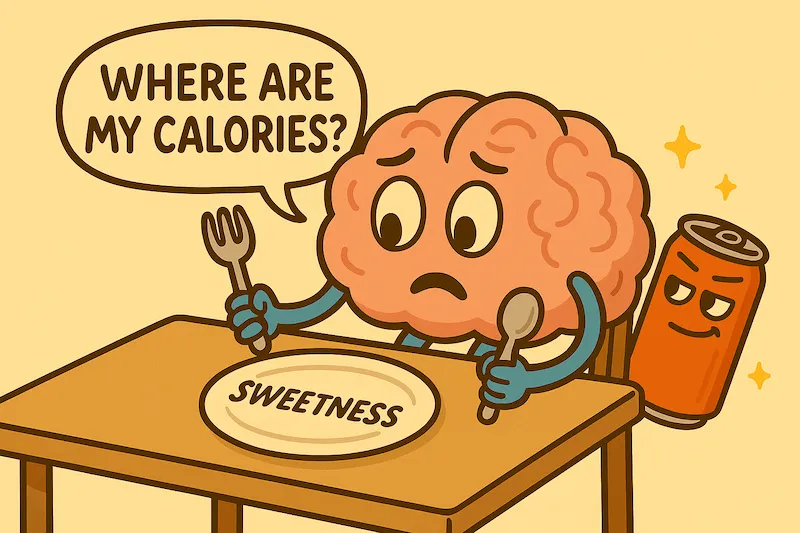
Think of your brain like a hyper-attentive chef, constantly tasting and sensing what’s coming into your body. It’s designed to expect calories when your tongue tastes sweetness. It gets ready to digest sugars and produce insulin to handle incoming energy. But with artificial sweeteners, your brain encounters a bizarre dilemma, it tastes sweetness but doesn’t get the calories it’s expecting.
The result? Your brain gets confused. It sends a frantic message:
“Hey, wait! Where’s my sugar? I’m hungry!”
Researchers have confirmed this by observing brain activity using advanced imaging techniques like functional MRI. When volunteers tasted artificial sweeteners, brain areas responsible for appetite regulation and decision-making lit up more intensely, especially in people with obesity. What’s intriguing is that this happened whether or not the drink had real calories, suggesting it’s the sweetness itself, rather than calories alone, that fires up your brain’s hunger signals.
The Sneaky Side Effect: Sweeteners Can Make You Eat More!
Imagine this scenario: You drink a diet soda with your lunch, feeling proud because you’ve skipped those calories. But later, your cravings kick in stronger than ever. You might reach for snacks or indulge in dessert, unknowingly eating more calories than if you’d just had regular sugar in moderation.
Sound familiar? This phenomenon, my friends, is the unintended “side effect” of sweeteners. It’s not just theoretical, multiple studies confirm that habitual sweetener users often end up consuming more calories overall.
A Sugar-Free Epidemic: Why Are Sweeteners Everywhere?
It’s no secret artificial sweeteners are booming in popularity. Half the population regularly consumes products sweetened artificially, drawn in by the promise of guilt-free indulgence. With obesity and diabetes on the rise, it’s understandable that these substitutes seem like a miracle solution. But the question remains, are we unintentionally setting ourselves up for greater hunger and unhealthy eating patterns?
Let me share my gut wisdom: Humans naturally develop taste preferences early in life. When we continually expose ourselves to intense sweetness, even without calories, we train our taste buds and brains to crave that sweetness. Eventually, plain water or unsweetened foods might feel bland, making us even more dependent on artificial sweeteners or sugary snacks.
My Expert Take: How Should You Navigate the Sweetener Maze?
I hear you wondering, “So, Dr. Ted, what should I do? Are sweeteners off-limits?”
Don’t worry, I’ve got you covered:
- If you have diabetes:
Artificial sweeteners can be a helpful tool. But balance is key. Aim to use them sparingly, and always pair your consumption with mindful eating practices. - If you’re healthy and trying to maintain your gut’s well-being:
It’s better to limit your exposure to intensely sweetened foods, whether real sugar or artificial. Hydrate with water or unsweetened beverages to retrain your taste buds and prevent overstimulating your brain’s appetite centers. - Curious about different sweeteners (stevia, erythritol, etc.)?
While some natural alternatives (like stevia) might have fewer negative effects, the scientific jury is still out. Recent studies even suggest potential risks with other sweeteners (like erythritol). Until we know more, moderation remains your safest bet.
Gut Wisdom for Sweetness Lovers: Moderation Wins!
Here’s my simple rule-of-thumb: Real sugar, in moderation, is better for most people than constant reliance on artificial sweeteners. If you really enjoy sweet tastes, consider slowly cutting back instead of going cold-turkey or switching entirely to sweeteners.
And remember, just because something is labeled “low-calorie” or “zero sugar” doesn’t automatically make it gut-friendly or healthy. Your gut and your brain deserve honesty, not trickery.
Final Bite of Wisdom
The sweetener saga reminds us of one timeless truth about gut health: Your gut and brain thrive on balance and consistency, not on tricks and shortcuts. So next time you reach for that diet soda, pause a second, and ask yourself: Is this truly what my gut (and brain) wants?


