

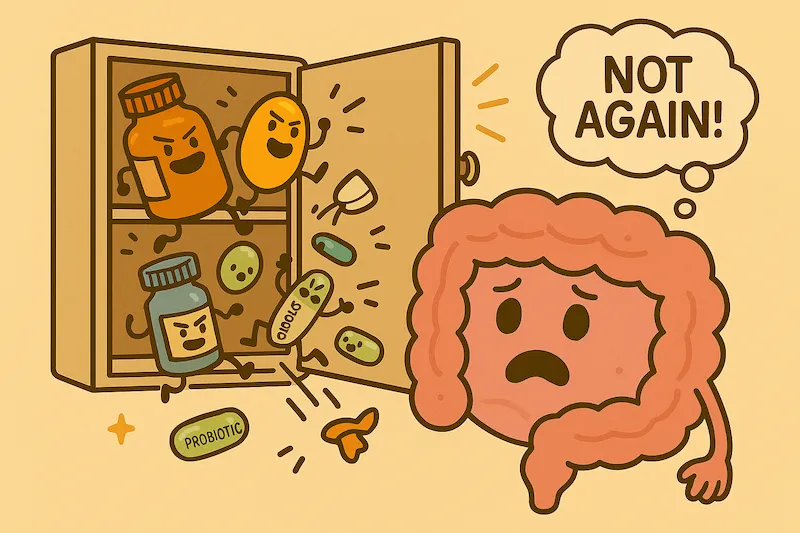
Hey there, gut enthusiasts! Today we’re diving deep into your belly to unravel a sneaky little mystery. Ever wondered why your gut sometimes seems grumpier than your uncle at Thanksgiving? Well, grab a seat because the culprit might just be hiding in your medicine cabinet!
Microbiome Madness: What’s the Big Deal?
Imagine your gut as a bustling, vibrant city, Gutropolis, let’s call it, packed with trillions of friendly bacteria who help digest food, make vitamins, and even boost your mood. Pretty impressive, right? But here’s the kicker: some common medications you probably take without thinking can turn your gut’s bustling city into a ghost town.
The Sneaky Suspects: Medicines Messing with Your Microbes
Let’s meet the gang causing all this chaos:
1. Antibiotics: The Good, the Bad, and the Ugly
Antibiotics are lifesavers, knocking out infections faster than you can say “achoo!” But they’re a bit like a tornado, taking out bad bacteria and the good guys in Gutropolis. The result? A takeover by nasty invaders and a citywide stomachache.
2. Proton Pump Inhibitors (PPIs): Acid Blockers, Trouble Makers
Got heartburn? You might be popping PPIs like candy. But here’s a twist, these acid reducers can send bacteria from your mouth straight to your gut, messing with how your body breaks down carbs. Next thing you know, bloating and gassiness are crashing the party.
3. NSAIDs: Anti-Inflammatory Agents Gone Wild
NSAIDs like ibuprofen might fix your headache, but they can wreak havoc on Gutropolis by punching holes in the intestinal walls and evicting good bacteria like Lactobacillus and Bifidobacterium. Result: less diversity and more tummy trouble.
4. Laxatives: Speeding Tickets in Your Gut
If you rely too much on laxatives, it’s like putting Gutropolis traffic on warp speed. Good bacteria get swept away, and your gut can lose important compounds called short-chain fatty acids that keep things healthy and balanced.
5. Chemotherapy: Uninvited Guests and Gut Chaos
Chemotherapy fights cancer cells, but it also shakes up your gut bacteria big-time. Think of it as a wild party where beneficial bacteria flee, and troublemakers like E. coli move in, leading to tummy troubles and weakened immunity.
6. Statins: The Cholesterol Crusaders With a Gut-Wrecking Side Hustle
Statins like atorvastatin help your heart, but in Gutropolis, they might lower helpful bacteria and invite unwanted troublemakers. They even change how your gut processes food, possibly affecting your overall health and metabolism.
7. Immunosuppressants: The Gut’s Security System Shutdown
Medicines that calm your immune system (like steroids or tacrolimus) also mess up your gut security. The result? Pathogens might sneak into Gutropolis, causing infections and other complications.
8. Antipsychotics: Mind Meds with Gut Drama
Antipsychotics can turn Gutropolis upside down, more Firmicutes, fewer Bacteroidetes, making your gut sluggish, bloated, and even prone to weight gain and high blood sugar.
9. Oral Diabetes Drugs: The Good, The Bad, and The Balanced
Some diabetes medications, like metformin, surprisingly benefit Gutropolis, promoting friendly bacteria. Others, though, can cause inflammation, so it’s a balancing act.
10. Antivirals and Antifungals: Good Intentions Gone Awry
These meds fight harmful viruses and fungi, but sometimes they accidentally evict friendly fungi and bacteria. The outcome? A microbiome meltdown.
How to Spot a Gut City Gone Rogue
Feeling bloated, constipated, overly gassy, or just not yourself? You might have “dysbiosis”, medical speak for a microbial imbalance in Gutropolis. Think of it as your gut sending an SOS!
Restoring Gutropolis to Its Former Glory
Good news! Usually, your microbiome bounces back after stopping the troublesome meds. But here’s how you can speed things along:
- Probiotics: Reinforce your good bacteria. Think of probiotics as your microbiome’s best buddies, ready to restore balance.
- Prebiotics: Feed those probiotics with high-fiber foods. Think fruits, veggies, and whole grains.
- Healthy Lifestyle: Exercise, manage stress, and get enough sleep, because Gutropolis thrives when you do.
And while the idea of a fecal microbiota transplant (FMT) might sound like sci-fi, right now it’s mainly used for severe cases, especially stubborn infections. Not exactly your everyday fix!
Don’t Believe All the Hype
With everyone talking about gut health, some wild claims have popped up, promising cures for everything from anxiety to autism. As fascinating as the microbiome is, remember that gut health isn’t a miracle fix-all, at least, not yet!
Your Takeaway: Be a Gut Guardian!
The meds we take can save lives, but they can also throw Gutropolis into chaos. Understanding this means you’re already one step ahead in keeping your microbiome happy and healthy. Next time you pop a pill, remember your gut’s bustling citizens, and maybe ask your friendly gastroenterologist (like yours truly!) about the best way to protect your microbiome.


