
Key Takeaways
- IBS is not IBD — IBS causes symptoms without visible damage, while IBD (Crohn’s, ulcerative colitis) shows clear inflammation and needs medical therapy.
- Red flag symptoms need a doctor’s visit: blood in stool, black stools, unexplained weight loss, fever, waking at night to go, or new symptoms after age 50.
- FODMAP-lite helps many with IBS — short trial swaps common triggers (onions, garlic, milk, apples) for gentler foods to identify personal sensitivities.
- Constipation relief = fiber + water + movement — add kiwifruit or prunes for extra help, and don’t force bowel movements.
- Reflux improves with habits — earlier dinners, smaller meals, raising the bed head, and avoiding common triggers like late coffee, chocolate, and big fatty meals.
- Peppermint and ginger can help — peppermint oil may ease cramps (but not for reflux-prone folks), and ginger often reduces nausea.
- Gas relief is possible — adjust portions of gas-forming foods and add fermented foods slowly, paired with short walks.
- Diarrhea care = hydration first — oral rehydration and simple foods can help short bouts, but persistent symptoms need medical review.
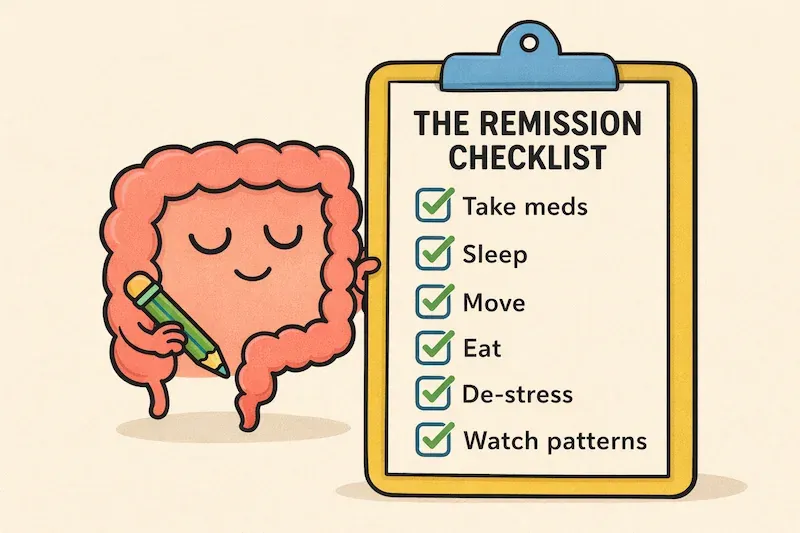
- A 7-day gut experiment works best — track symptoms, add breathing, try fiber or kiwi, test ginger or peppermint, and keep only what clearly helps.
Pull up a chair. Tell me if this sounds like you:
It’s 2 p.m. and your belly feels tight as a drum. Breakfast is arguing with lunch. You eye the clock, the bathroom, and the meeting invite, trying to calculate how much time you’ve got. You want something gentle, natural, and not another prescription if you can help it.
Good. You’re my kind of person. Let’s sort this out together, step by step, with options you can try at home and clear signals for when to call in backup.
First things first: IBS is not IBD
Quick clean-up on a common mix-up. IBS is a pattern of symptoms: belly pain, bloating, constipation, diarrhea, or both. No visible damage on scope. IBD is Crohn’s or ulcerative colitis. That is inflammation you can see, and it needs medical therapy.
Red flags mean stop and call your doctor: blood in the stool, black stools, fever, weight loss you can’t explain, waking from sleep to go, new symptoms after age 50, or serious dehydration.
If your belly is fussy and unpredictable: try a short “FODMAP-lite” phase
When IBS flares, the small bowel can be touchy about certain fermentable carbs called FODMAPs. You do not need a forever-diet. You need a clean, short experiment.
How to try it for 2 to 4 weeks
- Swap out the usual culprits like wheat bread, apples, pears, garlic, onion, and regular milk.
- Lean into rice, oats, firm bananas, berries, lactose-free dairy, eggs, chicken, tofu, zucchini, carrots, spinach.
- Reintroduce one food at a time to find your personal threshold. The goal is more freedom, not more rules.
Body-brain bonus Do diaphragmatic breathing for 5 minutes twice a day. Hand on belly, inhale 4, exhale 6. It lowers the “gut alarm,” and for constipation-prone IBS it can help you go.
Peppermint note Enteric-coated peppermint oil can calm cramping for some. Take 30 to 60 minutes before meals. If you get heartburn, it may not be your friend.
If constipation is your shadow: build a three-legged stool
Constipation usually improves when three basics show up together.
1) Fiber you can measure Aim for 25 to 35 grams per day. Food first. If you add a supplement, psyllium is a great place to start. Begin with 1 teaspoon in a tall glass of water daily. Work up slowly to 1 to 2 tablespoons as needed.
2) Water your colon actually gets About 8 cups for most adults, more with heat or workouts. Fiber without fluid is like concrete mix without water.
3) Movement that nudges your gut A brisk 20 to 30 minute walk helps the colon contract. Your stool is listening.
Food boosters I see win
- Two green kiwifruit a day for softer stools and less bloating.
- Prunes 4 to 6 daily for regularity.
Form over force Feet on a small stool, elbows on knees, lean forward, breathe out during the effort. If it isn’t happening in a minute, take a break. Forcing backfires.
If reflux rules your evenings: turn down the fire, don’t feed it
Start with anchors that work.
Core moves
- Finish dinner at least 3 hours before bed.
- Elevate the head of the bed 6 to 8 inches.
- Trim alcohol, big fatty meals, mint, chocolate, late coffee, and huge portions.
- Gentle weight loss helps if your BMI is high.
Soothers people ask me about
- Aloe vera syrup labeled for internal use can feel cooling for some. Start small. It can loosen stools and interact with meds.
- Apple cider vinegar is tricky. A splash diluted in a full glass of water before a meal may help a slow, gassy stomach, but for classic acid reflux it often stings. Protect your teeth with a straw and stop if you flare.
Persistent trouble swallowing, weight loss, or black stools are not DIY territory.
If gas is your headline: teach the bubbles better manners
Gas is normal. Painful, trapped gas is not your destiny.
Two-step plan
- Audit your plate for beans, cabbage, onions, sugar alcohols in “diet” bars and gum, and fizzy drinks. You don’t have to quit them. Tweak portions and pair with a short walk after meals.
- Add fermented foods slowly. A spoon of sauerkraut, a side of kimchi, a small glass of kefir, or yogurt if you tolerate lactose. One new food per week. Start tiny to avoid the microbiome roller coaster.
A fun swap for cocktail hour: bubbly water with a lemon slice. If reflux is your thing, keep it simple and skip the vinegar add-ins.
If nausea tags along: let ginger do its thing
Kitchen-level ginger helps many people with mild nausea.
- Toss a frozen ginger cube into a stir-fry or soup.
- Slice coins of fresh ginger, steep 10 minutes for tea, add honey if you like.
- Standardized capsules are an option, but check with your clinician if you’re on blood thinners or have gallbladder issues.
If diarrhea crashes the party: calm the cramp, protect the lining
Short bouts often follow a trigger food, stress, or a mild bug.
What I suggest first
- Hydrate with an oral rehydration solution or water with a pinch of salt and a splash of juice.
- Keep meals simple and low in lactose for a day or two.
- Enteric-coated peppermint oil can ease cramping for some adults. Skip if reflux is your nemesis.
If it lasts more than a few days, or you see blood, fever, or signs of dehydration, check in.
Your 7-day “try this, keep that” gut experiment
Day 1–2 Start a tiny symptom journal. Time, food, stress, sleep, movement, what your gut did. Patterns jump out fast.
Day 3–4 Add 5 minutes of belly breathing twice daily. Begin either kiwifruit or psyllium for constipation. Take one post-dinner walk.
Day 5–7 Do a FODMAP-lite swap of the biggest triggers. Test ginger if nausea bothers you. If cramping dominates, try enteric-coated peppermint before your two largest meals.
At week’s end, keep only what clearly helped. Drop the rest. Add new experiments one at a time.
When “natural” should pause
Natural does not always mean safe. Press pause and call your doctor if you have red flags, you’re pregnant, immunocompromised, or you take medications that interact with herbs or supplements.
Bottom line
You don’t need a cabinet full of potions. You need a short list you can actually do. For most people, the winning combo is simple: a brief FODMAP-lite reset to identify triggers, fiber plus water plus walking for constipation, ginger for mild nausea, careful peppermint for cramping, and steady reflux habits. Your gut loves rhythm more than heroics.
If you want help tailoring this to your story, that is exactly what Gutsavi is for.
This article is for education only and isn't a substitute for advice from your own doctor. If something feels off, talk to your care team.