
If you’re on a GLP-1 medicine like semaglutide or tirzepatide, you probably expected smaller portions, steadier blood sugars, and a quieter snack drawer. Then something else changed. Your interest in sex. Up, down, or just different.
You are not imagining it. These drugs talk to your gut, your brain, and your hormones. Appetite is not the only dial they can nudge. Today I’ll explain what might be happening, why some people feel less desire while others feel more, and how to steady the ship without guesswork. We will keep it plain, practical, and honest.
A quick story from clinic
Meet Riley. New to a GLP-1. Nausea the first week, then smooth sailing. Clothes fit better. Energy climbs. But another change sneaks in. Less interest in sex. No big fight, no relationship drama, just a quiet fade.
Riley wonders, “Is this me, stress, or the shot?”
Let’s unpack it.
What GLP-1 drugs actually do, beyond the scale
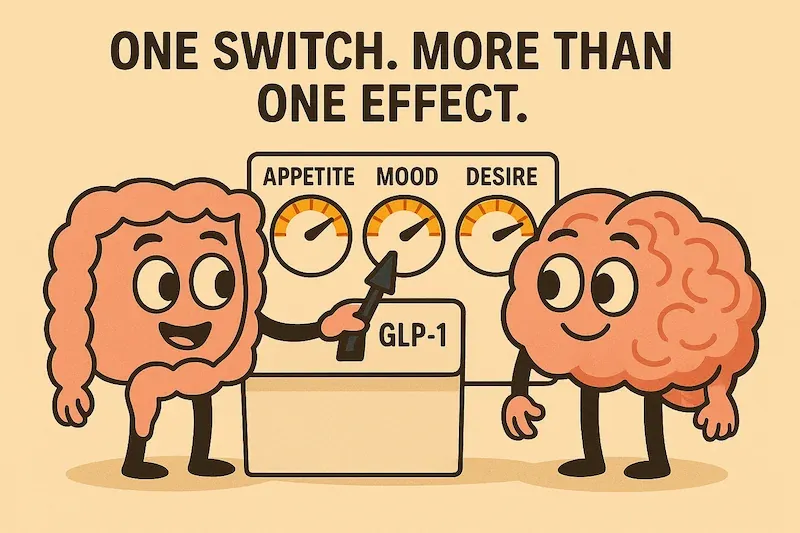
Think of your gut and brain as two friends who text all day. GLP-1 medicines boost one of those texts. That message slows stomach emptying, tames hunger, and helps blood sugar control. It also reaches brain areas that handle rewards and motivation. Food is one reward. Sex is another. When that system gets a softer signal, some people notice fewer cravings across the board. Others feel lighter, happier, more confident, and their desire rises. Both stories show up in real life.
Hormones matter too. Weight loss can lift testosterone in men with obesity and improve metabolic health, which can support sexual function. Early human data and conference reports point that way, though research is ongoing. In women, weight loss often boosts mood and self-esteem, but links to sexual function are mixed, and many factors outside weight still drive desire.
One more piece. Nausea, constipation, fatigue, and reflux are common early side effects. If your belly feels off, libido usually follows. The good news is that most GI side effects fade as your body adapts.
Why desire can go down
- Reward dial turns down. GLP-1 signals in the brain can reduce drive for rewards. That helps with food. It can also spill over into sex for some people.
- You feel crummy. Nausea, constipation, or fatigue make intimacy a tough sell.
- Hormone context. Men with low testosterone or women in menopause may already be on a thin edge. A new brain signal plus baseline hormone shifts can tip desire lower. Evidence is still developing, but it matches what many patients report.
- Stress and sleep. New routines, dose changes, and poor sleep all blunt libido. GLP-1s do not cancel basic biology.
Why desire can go up
- Weight loss wins. Better energy, mobility, mood, and confidence can lift interest. In men with obesity, improving metabolic health can raise testosterone, which often helps.
- Less reflux and bloat. A calmer gut feels safer and more comfortable. Comfort helps desire.
The gut angle you might be missing
Your gut is not just plumbing. It is a sensor. When the stomach empties slowly, gas sits longer, and that can mean pressure, belching, or early fullness. If meals shrink too much, protein, iron, B12, and zinc can slide. Low intake can sap energy and mood, which pulls desire down. A few smart shifts protect both your belly and your bedroom.
Your two-week “Reset the Dials” plan
Week 1: Steady the basics
- Dose review. If you ramped up fast and feel crummy, talk with your prescriber about holding, stepping back, or stretching the titration. This alone often helps libido.
- Protein anchor. Aim for a palm-sized protein source each meal. Eggs, Greek yogurt, tofu, fish, or chicken. Helps repair tissue and keep hormones happy.
- Gentle fiber. Add one soluble fiber choice daily to keep things moving. Cooked oats, kiwi, chia in yogurt, or 1 teaspoon psyllium with water. Hydrate.
- Bloat-smart timing. Plan larger meals 4 to 6 hours before intimacy. Keep the pre-bed snack light.
- Walk the gas out. Ten to twenty minutes after meals supports motility.
- Sleep window. Same wake time daily. Aim for at least 7 hours in bed. Desire likes rested brains.
Week 2: Support hormones and mood
- Strength matters. Two short resistance sessions this week. Squats to a chair, presses, rows, bands, or bodyweight. Muscle supports testosterone and energy.
- Plant variety 10+. Hit 10 different plants across the week. Color and fiber feed the microbiome and help regularity.
- Nausea toolkit. Ginger tea, slower eating, smaller portions, and carbonated drinks only if they sit well. Ask about anti-nausea options if needed.
- Connection time. Schedule non-sexual touch. A walk, a back rub, or shared cooking. Desire often follows safety and closeness.
- Check the stack. If you take an SSRI, antihypertensive, or finasteride, flag it. Some meds can lower libido. Your clinician can help sort out contributors.
Food list you can start today
Often helpful
- Greek or lactose-free yogurt, kefir
- Oats, firm bananas, chia, ground flax
- Cooked then cooled potatoes or rice
- Eggs, fish, tofu, slow-cooked chicken or beans
- Olive oil, avocado, walnuts
- Ginger tea or peppermint tea if tolerated
Go easy during flares
- Big raw salads and giant brassica piles
- Heavy carbonation if it bloats you
- Alcohol near bedtime
- Ultra-processed sweets that spike and crash
If you follow low-FODMAP, stick with lactose-free yogurt, firm bananas, oat-based choices, and small portions of sauerkraut or kimchi. Reintroductions still matter. Use a simple log.
What about hormones, fertility, and sexual function studies
- Men: In obese men, improving metabolic health with GLP-1 therapy has been linked to higher testosterone and better reproductive markers in early studies. Not every study shows the same thing, and many are small or preliminary, but the trend is encouraging.
- Women: Weight loss can improve mood and quality of life, yet research on direct effects on female sexual function is mixed. Many factors, including pain, pelvic floor issues, relationship stress, and medications, play a role.
- Neutral findings exist: One controlled study in healthy men on dulaglutide for four weeks found no negative changes in sexual desire or core reproductive hormones. Context matters. Dose, duration, health status, and side effects all shape the outcome.
If libido drops, here is your playbook
- Tell your clinician early. Ask about holding at the current dose or stepping down for a few weeks. Many libido dips improve when side effects are managed.
- Fix the basics. Sleep, hydration, and resistance exercise do more for desire than any supplement.
- Nausea and constipation control. Ginger, small frequent meals, fiber plus fluids, and a short walk after eating. Ask about medical options if home steps fail.
- Lab check if needed. If low energy, hair shedding, or cold intolerance join the party, ask about iron studies, B12, vitamin D, and in men, a morning testosterone panel.
- Mind the meds. Review antidepressants, blood pressure meds, and finasteride with your clinician.
- Plan intimacy like a workout. Set the scene on your best symptom day and time. Keep the meal earlier and lighter.
- Remember this is reversible. Libido changes usually settle with dose adjustments or, if needed, stopping the drug.
When to get more help
- Pain with sex, bleeding, or pelvic symptoms that do not improve
- Persistent low mood or thoughts of self-harm
- Severe or worsening GI symptoms, dehydration, or unplanned weight loss
- Ongoing erectile dysfunction, loss of morning erections, or very low desire that strains your relationship
GLP-1 labels also advise monitoring for mood changes. Speak up if you notice them.
Your one-minute reset
Before a meal or a moment of closeness, sit, one hand on chest and one on belly. Inhale for 4, hold for 2, exhale for 6. Five slow cycles. This cues your nervous system to switch from fight to digest, and from busy to present.
The takeaway
GLP-1 medicines change more than appetite. They touch reward circuits, gut rhythms, and hormone patterns. That can nudge sex drive down for some and up for others. If your desire dipped, you are not broken. Tuning the dose, easing GI symptoms, protecting sleep and muscle, and checking hormones when appropriate can bring balance back. Your gut and your brain are in constant conversation. We can help them get on the same page.
This article is for education only and isn't a substitute for advice from your own doctor. If something feels off, talk to your care team.