
Ever jolted awake from a wild dream, heart racing, mind spinning, and immediately thought, “What on Earth did I eat?” You wouldn’t be the first, nor the last, to blame a restless night on your dinner plate.
But wait, is there actually any truth behind this late-night folklore? Can last night’s pizza really chase you through haunted dreamscapes?
Buckle up, because the connection between what we eat and the nightmares that haunt our sleep might be stronger, and stranger, than you think!
The Midnight Mystery: A Tale from the Dream Kitchen
Let’s start with a quick story.
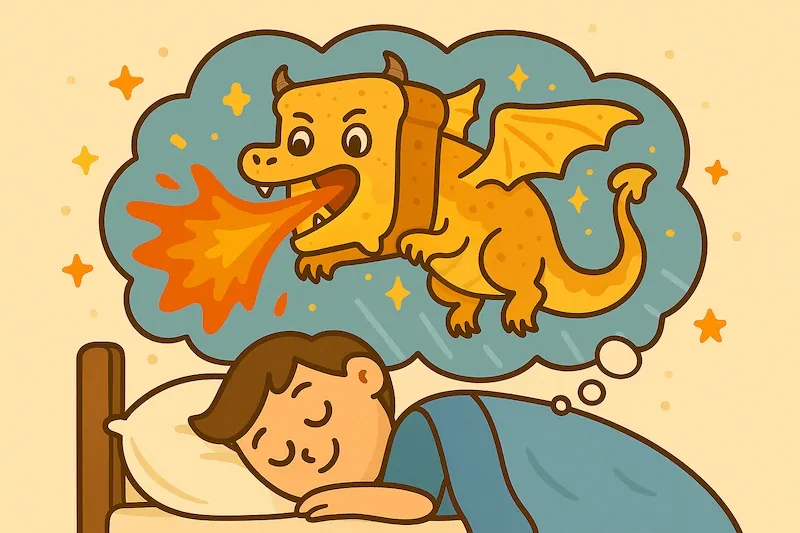
Imagine Sarah, your average college student. Sarah adores late-night snacking, particularly grilled cheese sandwiches dripping with cheddar. One night, after devouring two sandwiches at midnight, she finds herself fleeing from dragons chasing her through a maze of fiery corridors. Awake and breathless, Sarah wonders if the cheese might’ve conjured these fiery beasts.
Ridiculous? Maybe not.
The Curious Science Behind Food and Nightmares
Researchers have actually begun investigating the quirky link between your dinner and your dreams. Let’s explore three intriguing theories to crack this midnight mystery wide open.
Theory #1: Food as Dream Potion
Some foods might actually contain chemicals that mess directly with your dreams. Ever heard of medicines that cause bizarre dreams? Certain foods could have similar effects. Dairy products, for example, are notorious suspects. Remember Sarah’s grilled cheese nightmare?
Theory #2: Food as Midnight Villain (AKA the Distress Theory)
Ever gone to bed feeling bloated, spicy-hot, or otherwise uncomfortable after a meal? Turns out gastrointestinal distress, indigestion, acid reflux, bloating, might trigger restless sleep and nightmares. In fact, studies show people sensitive to dairy (like lactose-intolerant cheese lovers) experience more nightmares, even if they’re unaware of the connection. It’s your gut waving the nightmare flag: “Hey, maybe lay off the pizza before bedtime!”
Theory #3: Food as Sleep Saboteur
Then there’s food’s sneaky impact on your sleep quality. Consuming caffeine, alcohol, or heavy meals close to bedtime disrupts deep sleep patterns. Tossing and turning can prime your brain for nightmares. Again, bad news for late-night snackers.
Real-Life Evidence: Your Stomach Speaks the Truth!
A fascinating study recently surveyed over a thousand college students. Surprisingly, only a small fraction consciously believed food affected their dreams, yet those who did reported significantly more nightmares. Sweets and dairy emerged as the top culprits, leading to more disturbing dreams, while veggies, fruits, and calming herbal teas reportedly produced more pleasant nighttime adventures.
But the real kicker? Participants with lactose intolerance experienced frequent nightmares, not directly from the dairy itself, but because their gut discomfort disrupted restful sleep. The gut-brain connection strikes again!
Practical Gut Wisdom: How to Dodge the Nightmare Train
Here’s the exciting news: Your nightmares might actually be avoidable, at least partially. Here’s how you can reclaim your dreams from the monster under your stomach:
- Respect the Clock: Avoid eating large or spicy meals close to bedtime. Give your gut at least 2-3 hours to digest and settle.
- Listen to Your Body: If you notice certain foods consistently causing discomfort (and nightmares), that’s your gut signaling you to steer clear.
- Snack Smart: Opt for gentle evening snacks like bananas, cherries, or soothing herbal teas like chamomile, which can ease you into restful sleep.
The Bottom Line: Dickens Was onto Something
Ebenezer Scrooge might’ve been wiser than we gave him credit for. Your gut isn’t just digesting food, it’s influencing your brain, sleep, and dreams. Though Scrooge’s ghostly visitor turned out to be a real wake-up call (literally), most of us can happily skip the drama.
So tonight, if you’d rather avoid dragons, ghosts, and random dream-chases, maybe hold off on that midnight grilled cheese.
Sleep tight, dream sweetly, and let your gut guide you to a nightmare-free night!
This article is for education only and isn't a substitute for advice from your own doctor. If something feels off, talk to your care team.