
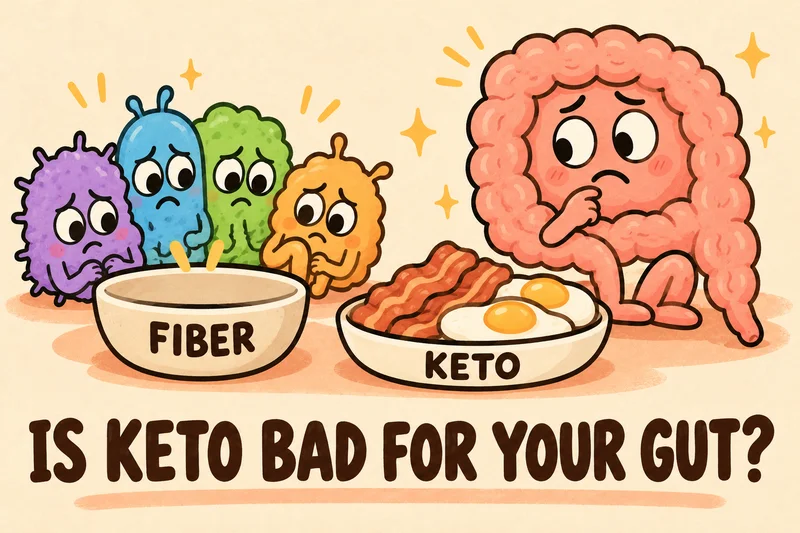
Is keto bad for you? As a long-term way of eating, for most people, the evidence says it isn’t a good bet. It strips out most of the fiber your gut bacteria live on, and plenty of people end up constipated. Your LDL cholesterol (low-density lipoprotein, the “bad” kind) may climb [1][6], and there’s very little data past two years [1]. Keto does have real medical uses, though, and I’ll give those a fair shake too.
The short version
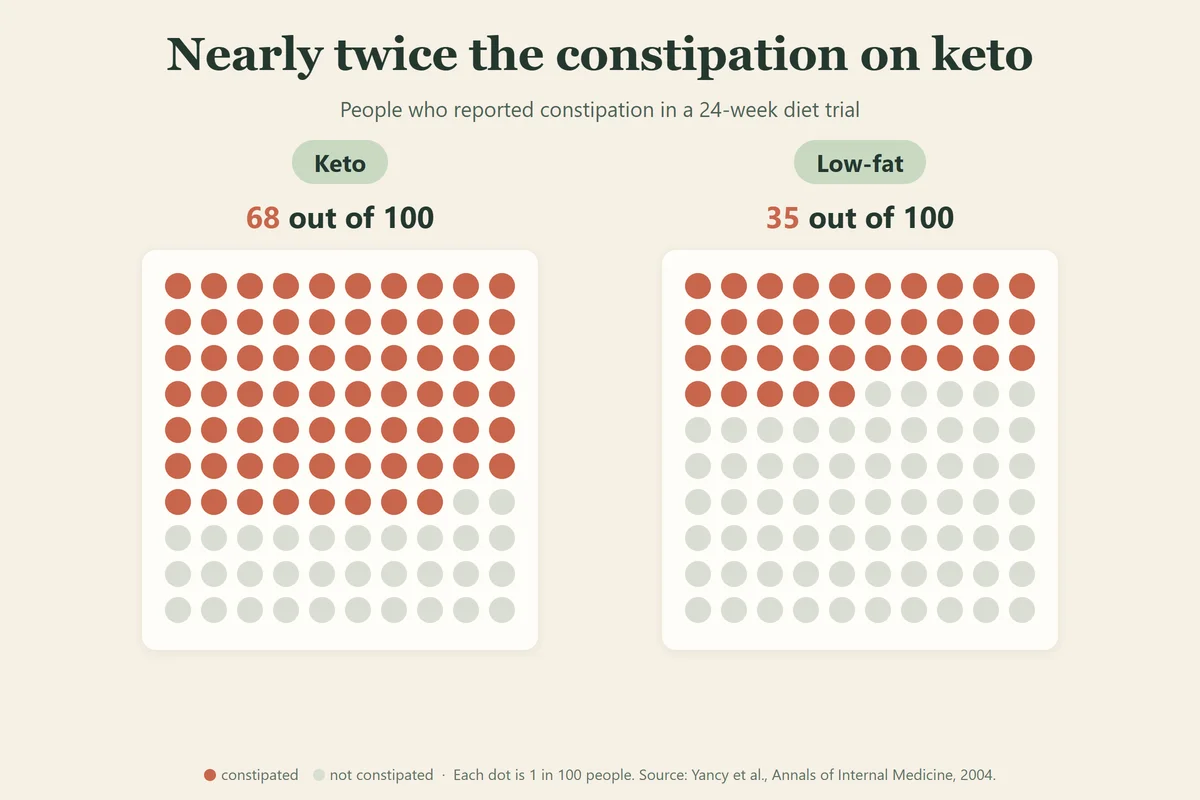
- Constipation hit 68% of people on keto in one trial, against 35% on a low-fat diet [9].
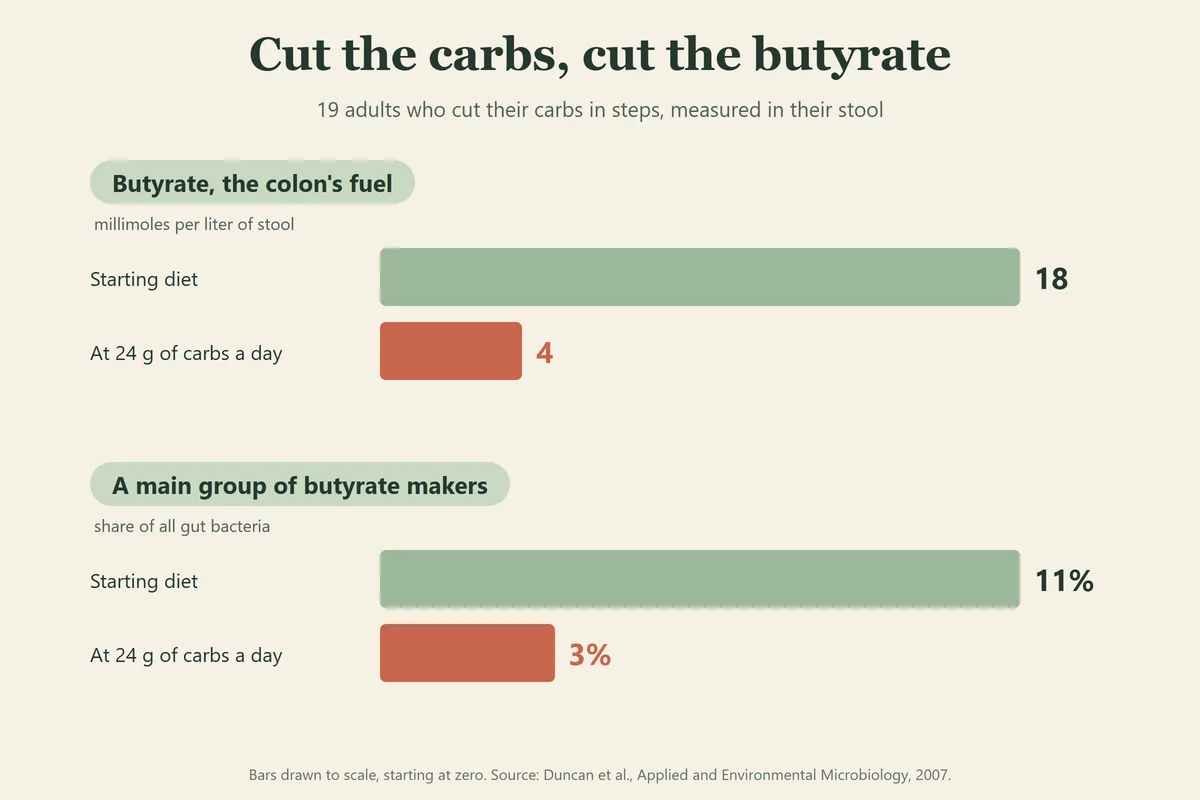
- When carbs dropped to 24 grams a day, stool butyrate, a fuel for the cells lining your colon, fell by more than half [10].
- Hoping to lose weight? Over a year, you’ll likely lose about the same as on other diets [1][2].
- Where it truly earns its keep: as a medical treatment for some children with epilepsy [7][8].
My take, in my own words
When I sent this topic to my team, I didn’t mince words: “the keto diet is terrible for you.” Not exactly a fence-sitter’s answer. So let me lay out what’s behind it, and you can weigh it yourself.
I’ve got four reasons. Keto starves your gut bacteria of the fiber they live on [10], and it often leaves people constipated [9]. It can push LDL cholesterol up [1][6]. And plenty of people can’t stick with it: in one year-long trial, about half quit [3].
In clinic, the keto complaint I hear about most is constipation.
So what counts as keto? The word is short for ketogenic. Cut carbs low enough and your body runs short of sugar to burn, so it burns fat instead. Your liver turns some of that fat into ketones, a backup fuel. Most plans aim for 20 to 50 grams of carbs a day, not counting fiber [5]. So, is the keto diet bad for you? I’d start with your gut.
What does keto do to your gut bacteria?
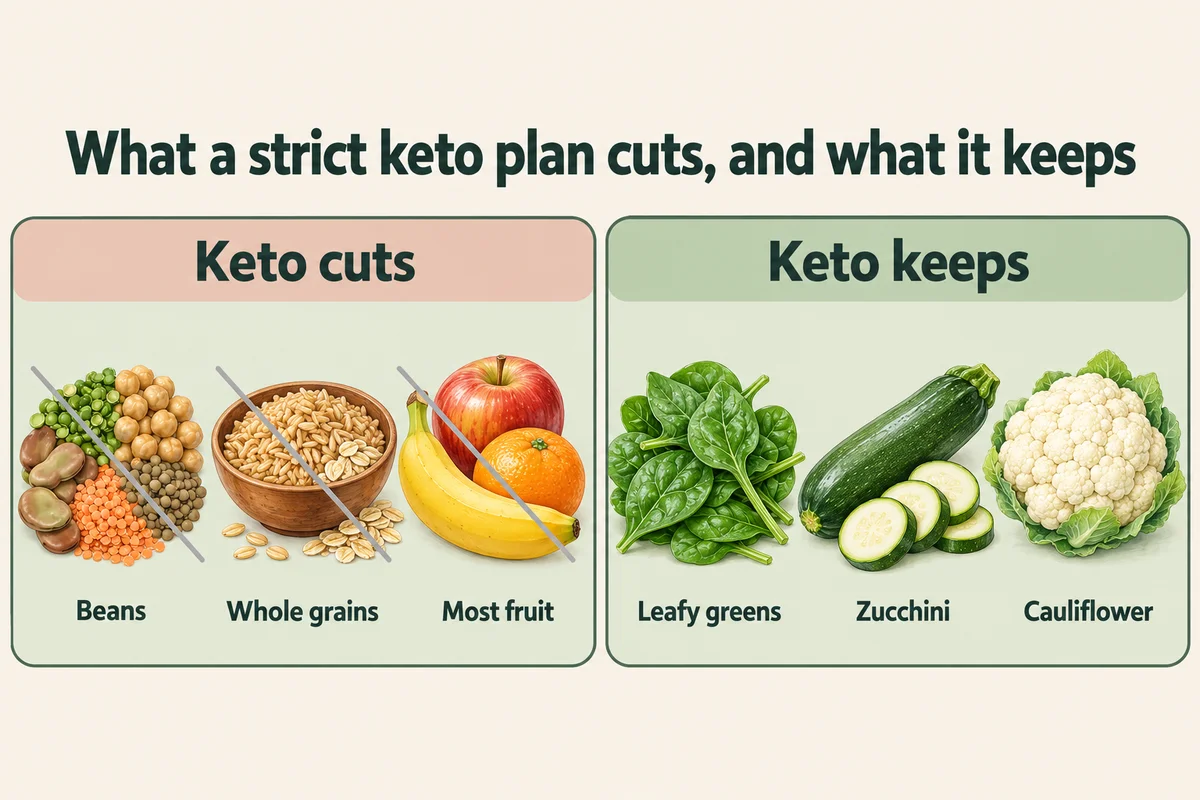
It changes them, and it doesn’t waste time. A strict keto plan drops beans, whole grains and most fruit. In a Stanford trial, people ate less fiber on keto than on a Mediterranean-style diet, the kind built on vegetables, beans and whole grains [6]. Cut the fiber and you’ve cancelled the grocery delivery for your gut bacteria.
That’s more than a bacteria problem. When bacteria ferment fiber, they make short-chain fatty acids, small fats your colon puts to work. One of them, butyrate, is what the cells lining your colon run on. In one study, 19 adults with obesity cut their carbs in steps [10]. Down at 24 grams a day, their stool butyrate fell from 18 to 4 millimoles per liter. One main group of the bacteria that make it went from 11% of the gut community to 3%. And bifidobacteria, a common group? Down by about half.
It wasn’t a fluke, either. A 2020 study kept people in a research unit for eight weeks, and keto caused “marked shifts” in their gut microbes [11]. In lab and mouse work, the same team found ketones themselves held bifidobacteria back.
Is every one of those changes bad? Honestly, we don’t know yet. The studies are small and short. Fiber, on the other hand, has a long track record. Pool 185 long-term studies, and the people who ate the most fiber had about 13 fewer deaths per 1,000 than the ones who ate the least [12]. The researchers pointed to 25 to 29 grams a day as the range to aim for.
Why does keto cause constipation?
Stool needs bulk to move well, and fiber supplies a lot of that bulk. Take it away and you get smaller, harder stool on a slower trip. In a 24-week trial, constipation hit 68% of people on keto, compared with 35% on a low-fat diet [9]. Kids treated with keto for epilepsy get it too; it’s one of their most common side effects [8].
Already stuck? Most of these fit a low-carb plan:
- Load your plate with nonstarchy vegetables. Leafy greens, zucchini and cauliflower all count [6].
- Stir chia seeds or ground flax into yogurt or a smoothie.
- Try psyllium, ground from plant seed husks. As I wrote in The Fiber Fix, it’s the fiber supplement I use most often in clinic.
- Drink more water. Keto makes you lose fluid, especially early on [5].
- Two or three days without a bowel movement, and bloated? Our constipation guide walks you through what to try next.
Is keto bad for your cholesterol and heart?
For some people, yes. The Stanford trial enrolled people with prediabetes (blood sugar above normal but not yet diabetes) or type 2 diabetes. Their LDL, the “bad” cholesterol, rose 10% on keto and fell 5% on the Mediterranean-style diet [6]. Across studies, the cholesterol specialists at the National Lipid Association call the LDL effects “mixed,” with some showing an increase [1].
Averages can fool you, though. The weather report says “mild” for the whole state while your county is digging out of a blizzard.
To be fair, keto doesn’t only push your numbers the wrong way. Your triglycerides (blood fats) usually fall [1][6]. In the Stanford trial, HDL rose too [6]. That’s high-density lipoprotein, the “good” cholesterol.
Going keto? Get your cholesterol checked before you start, then again a few months in. Then you and your doctor are looking at your own before and after, not somebody else’s average.
Is keto healthy long term?
Honest answer: nobody knows. The National Lipid Association found “minimal data” on safety beyond two years [1]. For a diet so often sold as a lifestyle, that’s a pretty thin résumé.
What we do have are observational studies. They can show a link, not proof. One pooled 432,179 adults [13]. Getting under 40% of your calories from carbs was tied to a higher risk of death than a moderate intake. But it mattered what took the carbs’ place. Meat and other animal foods went with higher risk, while plant fats and proteins, like nuts and vegetables, went with lower risk.
Kidney stones belong on the list too. Across 36 studies, about 6 in 100 people on keto developed one over roughly four years [14]. In adults it was nearly 8 in 100, though that estimate is far less certain.
Then there’s sticking with it. In a one-year trial of popular diets, only 21 of 40 people finished the Atkins arm, the group put on that well-known low-carb plan [3]. Weight loss depended on how well people stuck to their plan, and which plan it was barely mattered. It’s not the brand of running shoe. It’s whether you lace them up. Ever started “fresh on Monday” for the fifth time? I wrote about that on-and-off cycle, and a calmer way out of it, in The Quiet Superpower of Eating.
Where keto earns its place
Now the other side, because in the right hands keto does real good.
Epilepsy. That’s where keto started, as a medical diet used since the 1920s [8]. In a trial of 145 children whose seizures didn’t respond to drugs, 38% on keto had their seizures cut by more than half after three months [8]. In the comparison group? Just 6%. An international expert group, led from Johns Hopkins, calls keto diets an established, effective treatment for hard-to-control epilepsy in children [7]. And those children weren’t doing it alone: hospital centers treated and followed them [8].
Type 2 diabetes. In 8 of 23 pooled trials, 57% of people on low-carb diets got their blood sugar under the diabetes line at six months, against 31% on other diets [4]. That count included people still taking diabetes medicine. Leave them out and the gap shrank and wasn’t significant. By 12 months there wasn’t much data, and the gains in weight and triglycerides had shrunk. The American Diabetes Association calls cutting carbs “a viable approach” for some adults with type 2 diabetes [5].
Weight. Keto works, just not much better than anything else. In a year-long trial of 609 adults, people on a low-carb diet lost about 6.0 kg and people on a low-fat diet about 5.3 kg. That gap, about a pound and a half, was small enough to be chance [2]. The lipid experts summed it up in two words, which is about as excited as a scientific statement gets: “Not superior” [1].
IBS with diarrhea? A small 2009 study put people with IBS-D (irritable bowel syndrome where diarrhea is the main problem) on a very low-carb diet for four weeks [15]. Of the 13 who finished, 10 said their symptoms were adequately relieved the whole time. There was no comparison group, though. That makes it a lead worth following, not proof.
Some people shouldn’t start without their doctor. Take insulin or other diabetes medicines? Keto can drop your blood sugar fast and dry you out, so your doses may need changing first [5]. And there isn’t enough research yet to recommend it if you have kidney disease, are pregnant or have an eating disorder [5].
If you’re going to try it anyway
Still want to give it a go? That’s your call, and if you’re doing it, I’d rather you do it well. I’d treat it as a short experiment with an end date, not a way of eating for life.
From the research, a few things look worth doing:
- Lean on plant fats and proteins, like nuts, seeds and vegetables. In that big long-term study, those swaps went with lower risk [13].
- Build in fiber on purpose. The constipation list above is a good place to start.
- Get your cholesterol checked [6].
- Could you eat this way in five years? Ask yourself before you start.
Did you go low-carb because bread, beans or onions leave you bloated? The trouble may be a handful of fermentable carbs called FODMAPs, not carbs in general. Dropping every carb for that is a sledgehammer where a screwdriver would do. For IBS, guidelines suggest a limited low FODMAP trial, then adding foods back [16]. Our Chef Savi low FODMAP recipe generator builds those meals from what’s already in your kitchen.
One more thing from the Stanford trial: blood sugar improved about equally on both diets [6]. Most likely that came from what the two diets shared. Both cut added sugar and refined grains, and both kept the vegetables. And which one did people keep eating afterward? The Mediterranean-style one, beans, fruit and whole grains included.
When to call your doctor
Whatever you eat, don’t sit on these:
- no bowel movement for several days, with vomiting or a swollen, painful belly
- Blood in your stool. It always gets checked, diet or not.
- sudden, severe pain in your side or back, or blood in your urine, which can be a kidney stone
- On diabetes medicine and feeling shaky, sweaty or confused? Treat it as low blood sugar and call [5].
- dizziness or fainting, especially in your first weeks
Frequently asked questions
Why don’t doctors recommend keto?
How long is it safe to be on keto?
Why are people quitting keto?
Get Dr. Ted’s take on the next diet trend
Before you start the next diet in your feed, join the Gutsavi newsletter for Dr. Ted’s evidence-checked take. Want gut-friendly meals without the guesswork? Try Chef Savi. You can also browse our Learn hub or read The Fiber Fix.
Sources
- Kirkpatrick CF, Bolick JP, Kris-Etherton PM, et al. Review of current evidence and clinical recommendations on the effects of low-carbohydrate and very-low-carbohydrate (including ketogenic) diets for the management of body weight and other cardiometabolic risk factors: a scientific statement from the National Lipid Association Nutrition and Lifestyle Task Force. J Clin Lipidol. 2019;13(5):689-711. doi:10.1016/j.jacl.2019.08.003
- Gardner CD, Trepanowski JF, Del Gobbo LC, et al. Effect of low-fat vs low-carbohydrate diet on 12-month weight loss in overweight adults and the association with genotype pattern or insulin secretion: the DIETFITS randomized clinical trial. JAMA. 2018;319(7):667-79. doi:10.1001/jama.2018.0245
- Dansinger ML, Gleason JA, Griffith JL, Selker HP, Schaefer EJ. Comparison of the Atkins, Ornish, Weight Watchers, and Zone diets for weight loss and heart disease risk reduction: a randomized trial. JAMA. 2005;293(1):43-53. doi:10.1001/jama.293.1.43
- Goldenberg JZ, Day A, Brinkworth GD, et al. Efficacy and safety of low and very low carbohydrate diets for type 2 diabetes remission: systematic review and meta-analysis of published and unpublished randomized trial data. BMJ. 2021;372:m4743. doi:10.1136/bmj.m4743
- Evert AB, Dennison M, Gardner CD, et al. Nutrition therapy for adults with diabetes or prediabetes: a consensus report. Diabetes Care. 2019;42(5):731-54. doi:10.2337/dci19-0014
- Gardner CD, Landry MJ, Perelman D, et al. Effect of a ketogenic diet versus Mediterranean diet on glycated hemoglobin in individuals with prediabetes and type 2 diabetes mellitus: the interventional Keto-Med randomized crossover trial. Am J Clin Nutr. 2022;116(3):640-52. doi:10.1093/ajcn/nqac154
- Kossoff EH, Zupec-Kania BA, Auvin S, et al. Optimal clinical management of children receiving dietary therapies for epilepsy: updated recommendations of the International Ketogenic Diet Study Group. Epilepsia Open. 2018;3(2):175-92. doi:10.1002/epi4.12225
- Neal EG, Chaffe H, Schwartz RH, et al. The ketogenic diet for the treatment of childhood epilepsy: a randomised controlled trial. Lancet Neurol. 2008;7(6):500-6. doi:10.1016/S1474-4422(08)70092-9
- Yancy WS Jr, Olsen MK, Guyton JR, Bakst RP, Westman EC. A low-carbohydrate, ketogenic diet versus a low-fat diet to treat obesity and hyperlipidemia: a randomized, controlled trial. Ann Intern Med. 2004;140(10):769-77. doi:10.7326/0003-4819-140-10-200405180-00006
- Duncan SH, Belenguer A, Holtrop G, et al. Reduced dietary intake of carbohydrates by obese subjects results in decreased concentrations of butyrate and butyrate-producing bacteria in feces. Appl Environ Microbiol. 2007;73(4):1073-8. doi:10.1128/AEM.02340-06
- Ang QY, Alexander M, Newman JC, et al. Ketogenic diets alter the gut microbiome resulting in decreased intestinal Th17 cells. Cell. 2020;181(6):1263-75. doi:10.1016/j.cell.2020.04.027
- Reynolds A, Mann J, Cummings J, et al. Carbohydrate quality and human health: a series of systematic reviews and meta-analyses. Lancet. 2019;393(10170):434-45. doi:10.1016/S0140-6736(18)31809-9
- Seidelmann SB, Claggett B, Cheng S, et al. Dietary carbohydrate intake and mortality: a prospective cohort study and meta-analysis. Lancet Public Health. 2018;3(9):e419-28. doi:10.1016/S2468-2667(18)30135-X
- Acharya P, Acharya C, Thongprayoon C, et al. Incidence and characteristics of kidney stones in patients on ketogenic diet: a systematic review and meta-analysis. Diseases. 2021;9(2):39. doi:10.3390/diseases9020039
- Austin GL, Dalton CB, Hu Y, et al. A very low-carbohydrate diet improves symptoms and quality of life in diarrhea-predominant irritable bowel syndrome. Clin Gastroenterol Hepatol. 2009;7(6):706-8. doi:10.1016/j.cgh.2009.02.023
- Lacy BE, Pimentel M, Brenner DM, et al. ACG clinical guideline: management of irritable bowel syndrome. Am J Gastroenterol. 2021;116(1):17-44. doi:10.14309/ajg.0000000000001036
This article is for education only and isn’t medical advice. Talk with your own doctor about your care.
This article is for education only and isn't a substitute for advice from your own doctor. If something feels off, talk to your care team.