
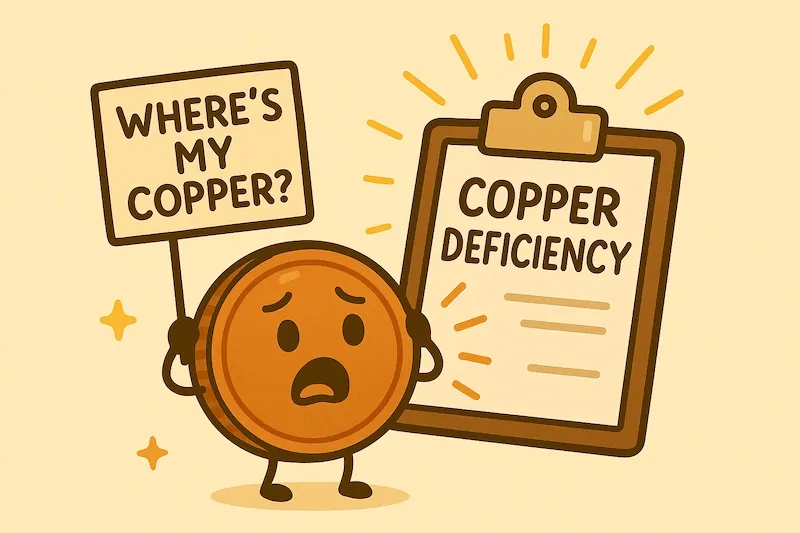
Imagine this: You’re in the prime of your life, maintaining a meticulous fitness routine, eating balanced meals, and feeling like you’ve mastered the secret to health. Your annual physical rolls around, and you confidently get your blood work done. A few days later, your doctor delivers surprising news: “You’re copper deficient.”
Copper deficient? Wait, copper as in the metal, like wires and pennies? Could someone as healthy and nutrition-conscious as you really be lacking something so obscure?
Yes and here’s how that happens.
The Unexpected Consequences of Supplements
If you’re like most health-conscious adults, you’ve probably taken, or at least considered taking, a multivitamin or dietary supplement. After all, we’re inundated with claims that supplements can optimize our health, boost energy, and even solve chronic health issues overnight.
But here’s something rarely talked about: supplements aren’t harmless magic pills. Even products from widely respected brands can have hidden problems. Case in point: multivitamins that have unbalanced ratios of essential minerals, particularly zinc and copper.
Let’s dive deeper into this example. Zinc and copper are nutritional siblings, they share absorption pathways and compete for space in your body. When a supplement is overloaded with zinc and doesn’t contain sufficient copper, it can cause an imbalance, leading your body into copper deficiency without you even knowing it. Copper deficiency isn’t trivial, it impacts your metabolism, bone health, nerve function, and immune system.
Yet this imbalance isn’t always obvious at first glance. Many people, fit, healthy, and informed individuals like you, can unknowingly disrupt their health simply by taking what they believe to be a beneficial supplement.
Behind the Scenes: The Unregulated World of Supplements
The supplement industry is largely misunderstood. Unlike prescription medications, dietary supplements in the U.S. are not strictly regulated by the FDA before they hit the market. There’s minimal oversight of supplement formulations. Shockingly, anyone with enough money and entrepreneurial ambition can contact a supplement manufacturing facility and order practically anything they want, in any dosage they prefer, no medical or scientific expertise required.
This creates a business landscape filled with supplements boasting trendy ingredients or exotic extracts, often in amounts far too tiny to provide meaningful health benefits. This is what’s known in the industry as “window dressing,” eye-catching labels filled with marketing buzzwords, but lacking substance.
And it’s not just minor companies doing this. Even reputable supplement brands can unknowingly put out products that lead to nutritional imbalances or deficiencies. Because there’s no strict pre-market oversight, problems aren’t discovered until customers, people just like you, report health issues, often after months or even years of consistent use.
Entrepreneurs, Not Medical Experts, Often Run the Show
Here’s an uncomfortable truth: many supplement companies are founded by entrepreneurs with zero medical or nutritional training. Their primary motivation? Profit from an industry that’s grown into a multi-billion-dollar market. They take advantage of our collective desire for quick fixes, miraculous shortcuts, and effortless health. In a culture obsessed with instant gratification, it’s all too easy for flashy packaging and slick marketing to override common sense.
That’s why we need a more cautious and informed approach to supplements. Just because something is marketed as natural or healthy doesn’t automatically make it safe, or beneficial. Supplements aren’t harmless candies, they’re substances capable of significantly altering your body’s chemistry.
Being Smarter, Not Faster, About Your Health
The allure of the supplement industry lies in the promise of easy answers. But real health doesn’t come from quick fixes, it’s built on informed decisions, scientific accuracy, and sustainable lifestyle choices.
Before you reach for your next dietary supplement, ask yourself these crucial questions:
- Do I really need this supplement, or am I buying into marketing hype?
- Have I discussed this supplement with my healthcare provider or dietitian?
- Is the company transparent about ingredients and scientifically supported dosages?
At Gutsavi, we understand that informed decisions require credible education. Supplements can absolutely have their place in supporting your health, but blind faith in them is risky. It’s time we, as a society, move away from chasing miracle solutions and instead embrace informed and thoughtful choices.
Your body deserves careful attention, not guesswork or flashy fads.
So next time you’re tempted by that fancy bottle promising rapid results, pause for a second. Remember: your gut, and your health, will thank you for being smarter about supplements.
This article is for education only and isn't a substitute for advice from your own doctor. If something feels off, talk to your care team.