
Med Opinion: Dr. Ted’s personal view on a healthcare issue, backed by the evidence below. It’s opinion and education, not advice for your own care.
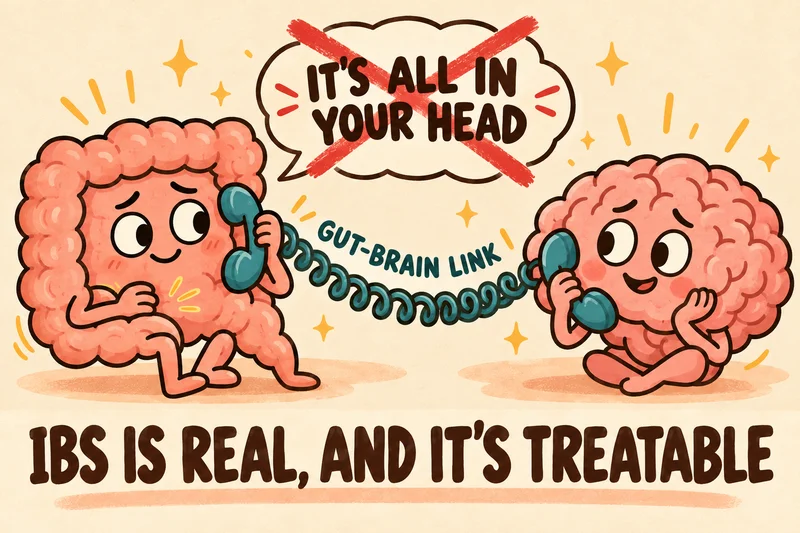
Is IBS all in your head? No. Irritable bowel syndrome (IBS) is a real disorder of how your gut and brain talk to each other [3][4], and it has treatments that work. Yet too many people with IBS are still told there’s nothing to do, or that it’s stress. That’s not just my impression; the surveys show the gap behind it [9][12].
If you only read this part
- IBS isn’t imaginary. Catch a bad gut infection and your odds of IBS run about 4 times higher in the year after [7].
- Guideline-backed options exist: diet changes, brain-gut therapies, several medicines [1][21][22].
- They’re under-used. Below: the numbers, the fixes I’d make, and what to ask at your next visit.
Is IBS psychological?
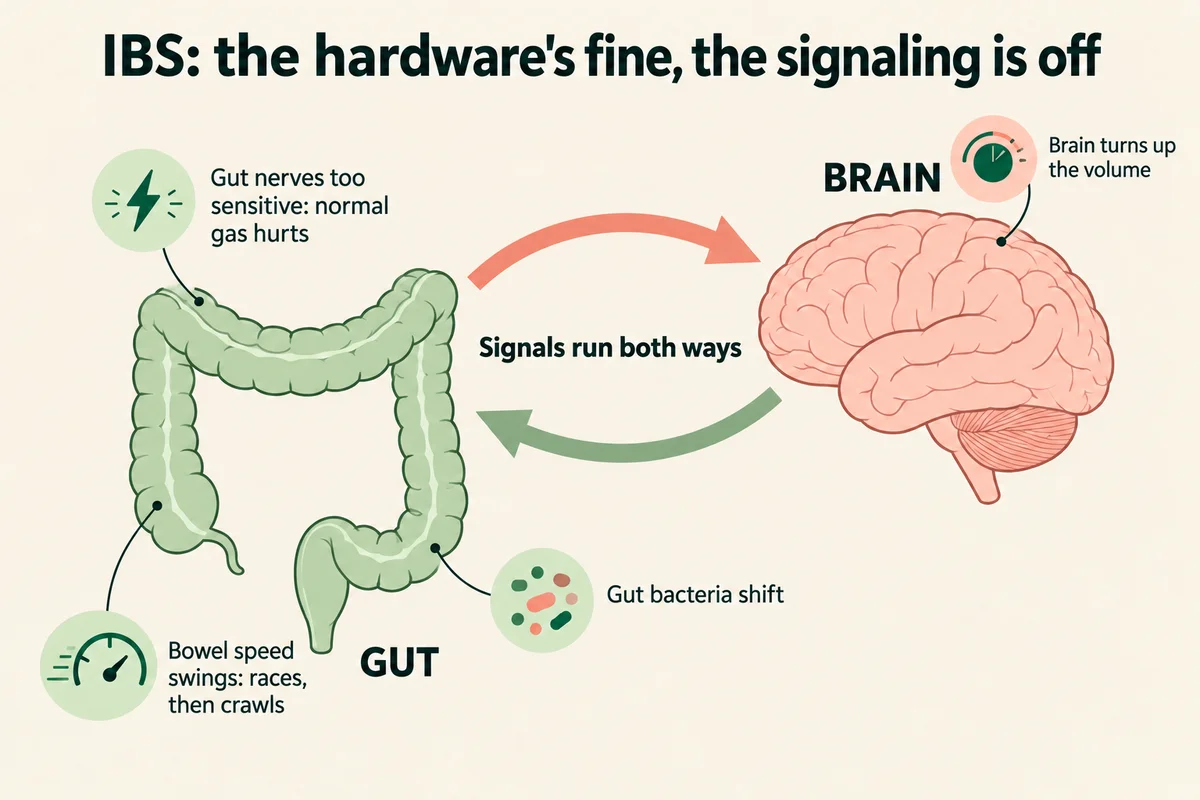
Not in the way you’ve probably heard it. Back in 2016, the Rome Foundation, the group that writes the diagnostic criteria, started calling IBS a “disorder of gut-brain interaction” [3]. My translation: the hardware’s fine, but the signaling is off.
A smoke alarm that screams over a slice of toast isn’t finding a fire. Nothing’s burning. The alarm is just set too sensitive. A lot of IBS works like that. Normal gas starts to hurt, because the gut’s nerves have become oversensitive. One week the bowel races; the next it crawls. The gut bacteria shift too. And your brain turns up the volume on all of it [4].
Had a nasty stomach bug, or a round of food poisoning? About 1 in 10 people who’ve had one have IBS a year later [7]. Nobody blames a germ on your imagination.
Anxiety and depression do show up more often with IBS, about 3 times the odds [8]. The gut-brain line runs both ways. Stress, anxiety and depression actually cause GI (gut) symptoms. That doesn’t make the symptoms fake. And a gut that hurts every day will grind down anybody’s mood. I dig into the worry side in can anxiety cause stomach pain?
Even the rulebook is changing its language. The 2026 update of the criteria, called Rome V, set out to cut “imprecise or stigmatizing terms” [4]. About time.
Why IBS is my lane
I’ve directed a neurogastroenterology and motility program. In plain words, that’s the gut’s nerves and how things move through it, so IBS isn’t a side topic for me. It isn’t rare, either. By the newest criteria, it affects about 1 in 12 adults in a 15-country survey [6].
When I sent in the idea for this piece, my note said IBS is “not just in your head.” That’s still the whole point.
Many of the new IBS patients I see have already been told it’s stress, or that there’s nothing more to do.
I’m not here to bash anybody’s doctor. IBS has no single blood test that proves it, so it’s tempting to keep ordering scans “to be sure.” Trouble is, a scan photographs the hardware, and IBS lives in the wiring. The surveys below show what that habit costs [9].
The IBS care gap, in numbers
For years the guidelines have said IBS is a positive diagnosis. You make it from the story, the exam and a few targeted tests, not from whatever’s left after every test comes back normal [1][9]. Practice hasn’t caught up.
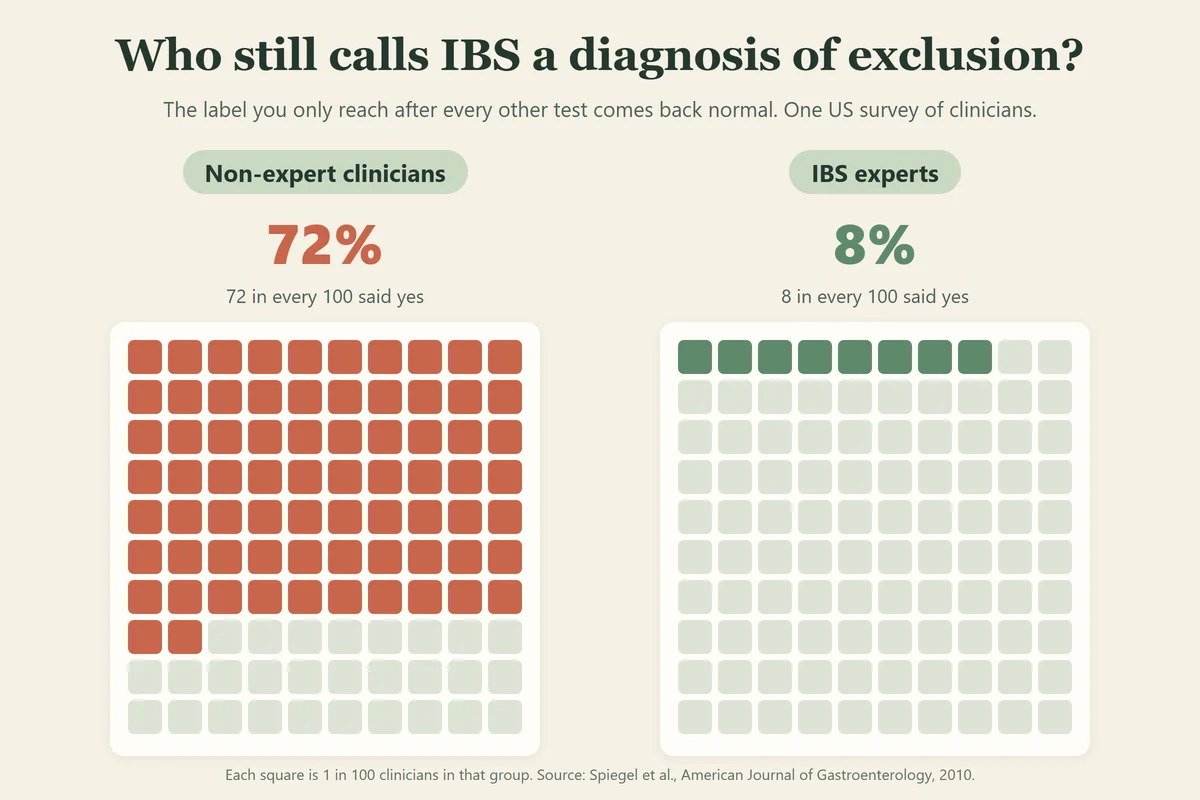
- Diagnosis by exclusion. In a US survey, 72% of non-expert clinicians called IBS a diagnosis of exclusion. Among IBS experts? 8%. The non-experts ordered about twice the tests, at more than twice the cost [9].
- Basic tests get skipped. Even the American College of Gastroenterology (ACG) admits that in IBS with diarrhea, testing for celiac disease and IBD “is not routinely performed by many health care providers” [2]. Celiac is an immune reaction to gluten. IBD is inflammatory bowel disease, the Crohn’s and colitis family.
- Pain medicines don’t get used much. Low-dose nerve-calming medicines, like a tricyclic antidepressant, are guideline-backed for IBS pain [1]. US gastroenterologists use them in about 1 in 4 of their IBS patients. IBS experts? Nearly half [10].
- Told to change your diet, then handed a “good luck”? Over half of US gastroenterologists recommend diet changes to most IBS patients. Only 21% commonly refer to a dietitian [11].
- And yes, somebody measured the stigma. In one study, 27% of people with IBS reported moderate to high stigma, against 8% with IBD. Where was the biggest gap? Stigma from health care providers [12].
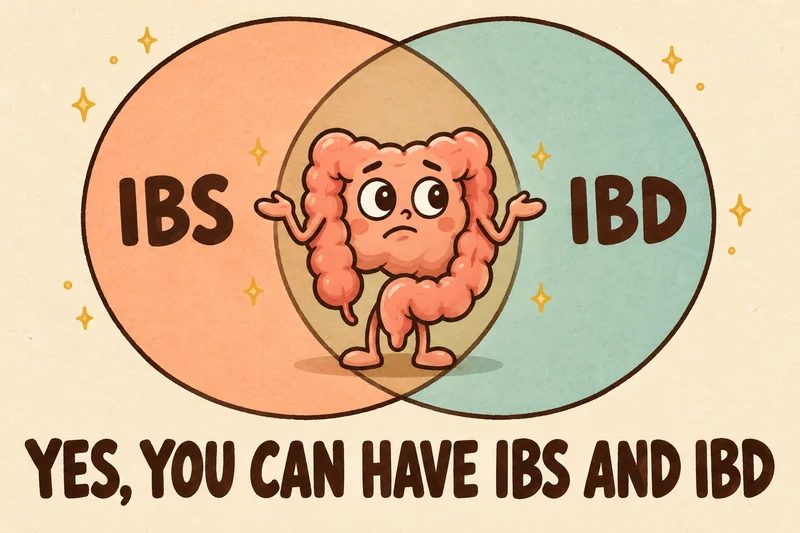
Plenty of patients never get the basics explained, either. In one national survey, 43% of people with IBS believed it could turn into colitis (inflammation of the colon). Another 21% thought it could become cancer [13]. IBS doesn’t do either. Got both? Read can you have IBS and IBD at the same time?
Those eye-rolls aren’t harmless. In that same stigma study, people who felt more stigma had more depression and anxiety and a lower quality of life [12].
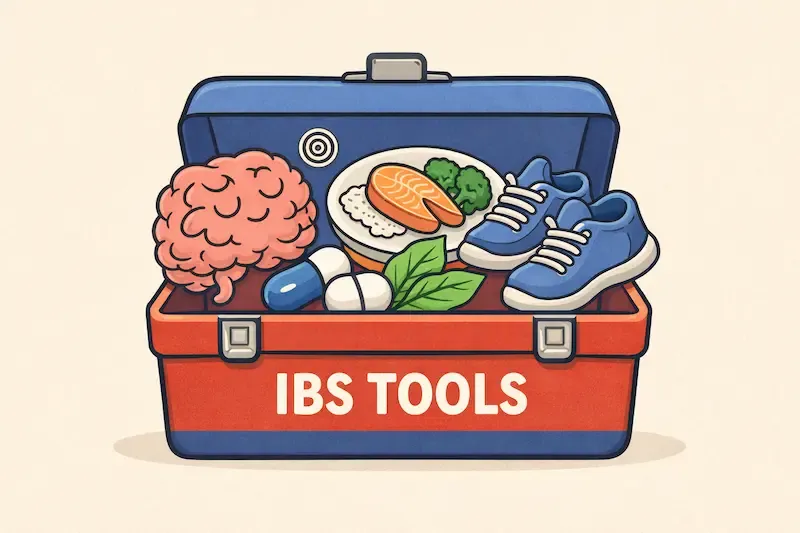
Is IBS treatable? Yes, and here’s the toolbox
No magic switch, but a long list of treatments with trial evidence behind them. With a new patient, once the diagnosis is clear, I usually start with a short low FODMAP trial (a few weeks off certain hard-to-digest carbs).
Start with a confident diagnosis. If you’re under 45 with no warning signs, the ACG advises against a routine colonoscopy (a camera exam of the colon) just for IBS symptoms [2]. With diarrhea, you should get a celiac blood test and an inflammation check [1][14]. For inflammation, that means a CRP (C-reactive protein) blood test. Add a stool calprotectin too, which looks for gut inflammation [1][14]. Then treatment starts, instead of more searching. Once you know it’s the wiring, you stop tearing out the pipes.
A short low FODMAP trial. FODMAPs are carbs your gut may handle poorly. In one careful trial where the food was provided, overall symptom scores roughly halved on low FODMAP [15]. The ACG suggests a limited trial, not a life sentence. First you cut back. Then you bring foods back one group at a time, and you end up with your own version [1]. Cooking it is the hard part, and that’s where our Chef Savi low FODMAP recipe generator helps.
Soluble fiber, like psyllium. Soluble fiber is the kind that dissolves in water. Psyllium is the fiber in Metamucil, and it’s a strong recommendation [1]. Not glamorous, I know. Insoluble fiber, like bran, didn’t make the cut.
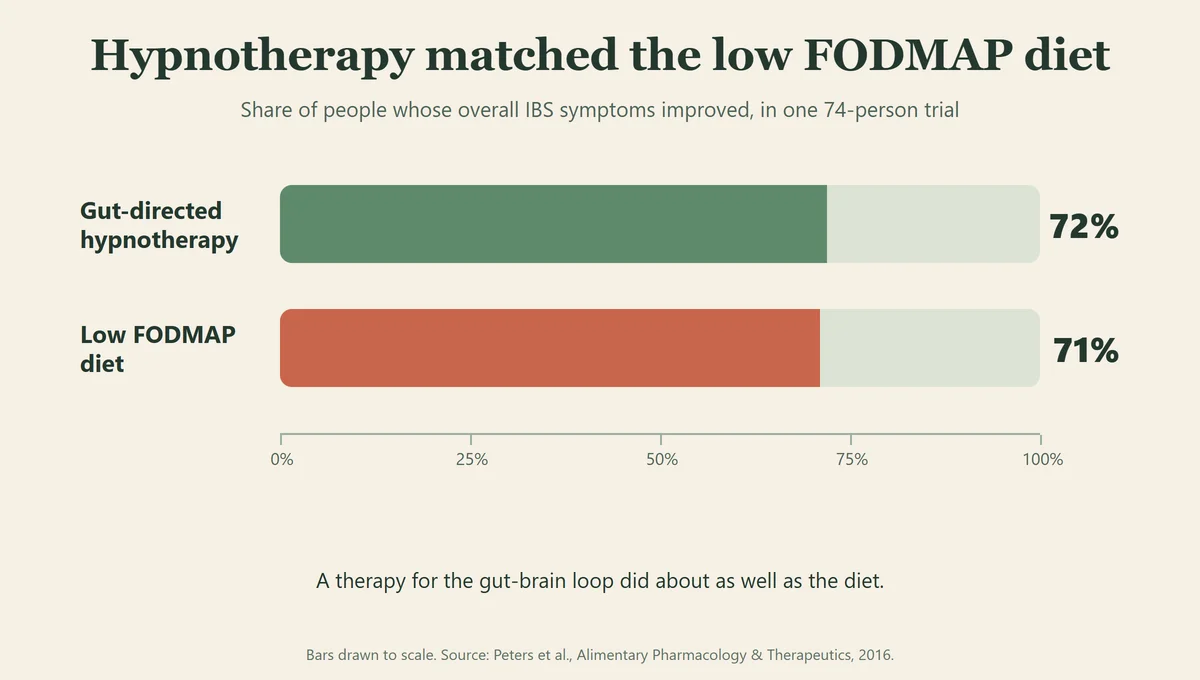
Brain-gut therapies. Here’s where “it’s in your head” gets turned upside down. One is gut-directed CBT. That’s short for cognitive behavioral therapy, and it’s talk therapy with your gut as the target. The other is gut-directed hypnotherapy: deep relaxation, then suggestions aimed at how your gut feels. Both work on the gut-brain loop itself, and the ACG suggests them [1]. Pool 41 trials of psychological therapies, with about 2,300 people, and gut symptoms eased. The benefit was still there 6 to 12 months later [16]. In a 74-person trial, hypnotherapy worked about as well as the low FODMAP diet, with 72% vs 71% improving [18]. Can’t find a therapist nearby? In a US trial of 436 people, CBT done mostly at home, with just 4 sessions, helped 61% of people, against 44% who got education alone [17].
Medicines matched to your symptoms. Your doctor picks from these depending on your type:
- For pain and overall symptoms, a low-dose tricyclic like amitriptyline. The ACG recommends this group of medicines for overall IBS symptoms, belly pain included [2].
- Peppermint oil? It’s a guideline-suggested option for overall symptoms [1].
- IBS with constipation? Prescription options include linaclotide, a pill that draws fluid into the bowel. It has a strong recommendation from the American Gastroenterological Association (AGA) [21].
- With diarrhea, there’s rifaximin, a gut antibiotic [22]. Loperamide (Imodium) and others are on that list too [22].
So what didn’t make the list? Probiotics for overall IBS symptoms, for one [14]. Sorry, supplement aisle. Fecal transplants (stool from a healthy donor) didn’t either [14]. And SSRIs, a common type of antidepressant like sertraline, got a conditional “no” from the AGA [21][22].
What I’d change
Now the opinion part. Five fixes I think would close the gap. Which one would you pick?
- Make the diagnosis with confidence, and early, so treatment starts sooner, with fewer repeat tests [2][9].
- Brain-gut therapy belongs in the plan alongside diet and medicines, “rather than as a last resort,” in the ACG’s own words [2].
- Get more of it online. CBT can already be done mostly at home, and there are hypnotherapy apps. Early results are mixed but promising [17][19].
- Put dietitians where IBS patients are. Only about 1 in 5 GI doctors commonly refers to one. Not enough [11].
- Change the words. “Nothing’s wrong” and “it’s just stress” should go. Rome V is already heading there [4].
Which would I push hardest? The first. Get the diagnosis early, say it with confidence, and treatment can start. Otherwise it’s yet another round of tests.
Questions to take to your next appointment
No need to pick a fight with your doctor. Bring these instead:
- “Do my symptoms meet the criteria for IBS, and which type?”
- Have I been tested for celiac disease and inflammation?
- If diet seems to matter: could a dietitian walk me through a low FODMAP trial?
- Is pain the part that wrecks your day? Ask whether a low-dose nerve-calming medicine makes sense.
- “Can you refer me for gut-directed CBT or hypnotherapy?”
When to call your doctor
These aren’t typical of IBS. Get checked if you have:
- Blood in your stool, or black, tarry stool
- weight loss you can’t explain
- Symptoms that started later in life? Those need a look [2].
- a family history of colon cancer, IBD or other serious gut disease [2]
- diarrhea that wakes you up at night, or a fever
- anemia (a low red blood cell count) on a blood test
Frequently asked questions
Is IBS a gut-brain disorder?
Yes. The Rome Foundation, which sets the criteria, files IBS under disorders of gut-brain interaction [3]. Your gut and brain get their signals crossed. The gut moves oddly, and ordinary sensations start to hurt. Nerves, gut bacteria and the immune system all play a part [4]. None of that is imagination.
Can IBS be cured permanently?
Can you live a normal life with IBS?
Many people do, especially once the IBS is treated. IBS and related gut-brain disorders are linked to lower quality of life and more doctor visits [5]. That’s a reason to treat it, not to put up with it.
Does being sent to a psychologist mean my doctor thinks it’s in my head?
Got a story? Tell us
Were you ever told your IBS was “all in your head”? What finally helped? Tell us in the comments. For more, browse our abdominal pain and bloating guide, read how stress changes your gut, try Chef Savi for low FODMAP meals, or join the Gutsavi newsletter.
Sources
- Lacy BE, Pimentel M, Brenner DM, et al. ACG clinical guideline: management of irritable bowel syndrome. Am J Gastroenterol. 2021;116(1):17-44. doi:10.14309/ajg.0000000000001036
- American College of Gastroenterology. ACG’s first clinical guideline on management of irritable bowel syndrome. ACG Magazine. 2021. gi.org summary (PDF)
- Drossman DA, Hasler WL. Rome IV, functional GI disorders: disorders of gut-brain interaction. Gastroenterology. 2016;150(6):1257-61. doi:10.1053/j.gastro.2016.03.035
- Drossman DA, Chang L, Tack J. Disorders of gut-brain interaction and the Rome V process. Gastroenterology. 2026;170:1083-98. doi:10.1053/j.gastro.2026.02.014
- Sperber AD, Bangdiwala SI, Drossman DA, et al. Worldwide prevalence and burden of functional gastrointestinal disorders, results of Rome Foundation Global Study. Gastroenterology. 2021;160(1):99-114. doi:10.1053/j.gastro.2020.04.014
- Sperber AD, Hreinsson JP, Simrén M, et al. Rome V global epidemiology and validation survey: prevalence of disorders of gut-brain interaction. Gut. 2026;75:1887-97. doi:10.1136/gutjnl-2026-339666
- Klem F, Wadhwa A, Prokop LJ, et al. Prevalence, risk factors, and outcomes of irritable bowel syndrome after infectious enteritis: a systematic review and meta-analysis. Gastroenterology. 2017;152(5):1042-54. doi:10.1053/j.gastro.2016.12.039
- Zamani M, Alizadeh-Tabari S, Zamani V. Systematic review with meta-analysis: the prevalence of anxiety and depression in patients with irritable bowel syndrome. Aliment Pharmacol Ther. 2019;50(2):132-43. doi:10.1111/apt.15325
- Spiegel BM, Farid M, Esrailian E, Talley J, Chang L. Is irritable bowel syndrome a diagnosis of exclusion? A survey of primary care providers, gastroenterologists, and IBS experts. Am J Gastroenterol. 2010;105(4):848-58. doi:10.1038/ajg.2010.47
- Nulsen B, LeBrett W, Drossman DA, Chang L. A survey of gastroenterologists in the United States on the use of central neuromodulators for treating irritable bowel syndrome. Aliment Pharmacol Ther. 2021;54(3):281-91. doi:10.1111/apt.16467
- Lenhart A, Ferch C, Shaw M, Chey WD. Use of dietary management in irritable bowel syndrome: results of a survey of over 1500 United States gastroenterologists. J Neurogastroenterol Motil. 2018;24(3):437-51. doi:10.5056/jnm17116
- Taft TH, Keefer L, Artz C, Bratten J, Jones MP. Perceptions of illness stigma in patients with inflammatory bowel disease and irritable bowel syndrome. Qual Life Res. 2011;20(9):1391-9. doi:10.1007/s11136-011-9883-x
- Halpert A, Dalton CB, Palsson O, et al. What patients know about irritable bowel syndrome (IBS) and what they would like to know. National survey on patient educational needs in IBS and development and validation of the Patient Educational Needs Questionnaire (PEQ). Am J Gastroenterol. 2007;102(9):1972-82. doi:10.1111/j.1572-0241.2007.01254.x
- Lacy BE. Update on irritable bowel syndrome guidelines (interview). Gastroenterol Hepatol (N Y). 2020;16(12):648-50. PDF
- Halmos EP, Power VA, Shepherd SJ, Gibson PR, Muir JG. A diet low in FODMAPs reduces symptoms of irritable bowel syndrome. Gastroenterology. 2014;146(1):67-75. doi:10.1053/j.gastro.2013.09.046
- Laird KT, Tanner-Smith EE, Russell AC, Hollon SD, Walker LS. Short-term and long-term efficacy of psychological therapies for irritable bowel syndrome: a systematic review and meta-analysis. Clin Gastroenterol Hepatol. 2016;14(7):937-47. doi:10.1016/j.cgh.2015.11.020
- Lackner JM, Jaccard J, Keefer L, et al. Improvement in gastrointestinal symptoms after cognitive behavior therapy for refractory irritable bowel syndrome. Gastroenterology. 2018;155(1):47-57. doi:10.1053/j.gastro.2018.03.063
- Peters SL, Yao CK, Philpott H, et al. Randomised clinical trial: the efficacy of gut-directed hypnotherapy is similar to that of the low FODMAP diet for the treatment of irritable bowel syndrome. Aliment Pharmacol Ther. 2016;44(5):447-59. doi:10.1111/apt.13706
- Berry SK, Berry R, Recker D, et al. A randomized parallel-group study of digital gut-directed hypnotherapy vs muscle relaxation for irritable bowel syndrome. Clin Gastroenterol Hepatol. 2023;21(12):3152-9. doi:10.1016/j.cgh.2023.06.015
- Keefer L, Ballou SK, Drossman DA, et al. A Rome Working Team report on brain-gut behavior therapies for disorders of gut-brain interaction. Gastroenterology. 2022;162(1):300-15. doi:10.1053/j.gastro.2021.09.015
- Chang L, Sultan S, Lembo A, et al. AGA clinical practice guideline on the pharmacological management of irritable bowel syndrome with constipation. Gastroenterology. 2022;163(1):118-36. doi:10.1053/j.gastro.2022.04.016
- Lembo A, Sultan S, Chang L, et al. AGA clinical practice guideline on the pharmacological management of irritable bowel syndrome with diarrhea. Gastroenterology. 2022;163(1):137-51. doi:10.1053/j.gastro.2022.04.017
This article is Dr. Ted’s opinion and general education, not medical advice. Talk with your own doctor about your care.
This article is for education only and isn't a substitute for advice from your own doctor. If something feels off, talk to your care team.