
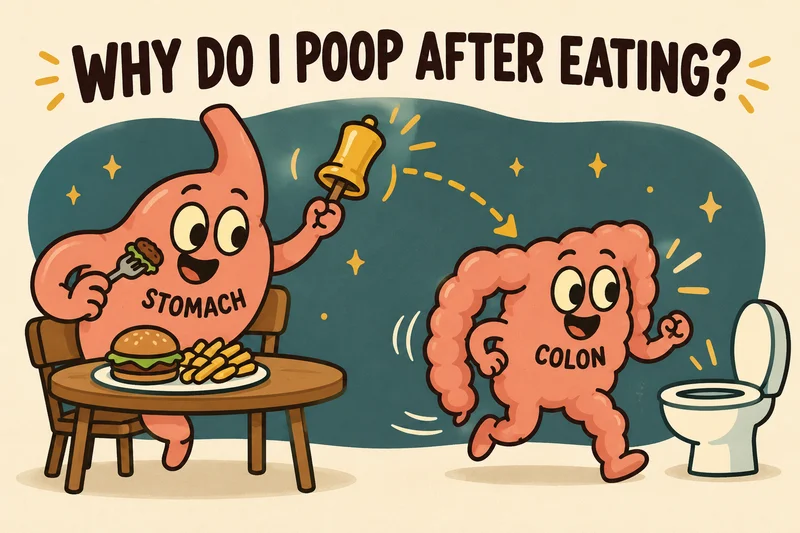
Why do I poop right after I eat? Most of the time, it’s the gastrocolic reflex. Food stretches your stomach, and your stomach tells your colon (the large intestine) to clear some room. The colon then pushes along stool that was already sitting there [1][2]. It isn’t the meal you just ate; that one takes a day or two to make the trip [5]. Pooping after eating is usually normal. Big, greasy meals, coffee and IBS can turn it up, and a few warning signs mean it’s time to see a doctor.
If you read nothing else
- The urge can show up within minutes of a meal. That’s a built-in reflex, not food “going straight through you” [1][2].
- Doctors use it on purpose. Sitting on the toilet 15 to 45 minutes after breakfast is a classic way to get more regular [7].
- Blood, black stools, weight loss, or new diarrhea that won’t quit are not part of the reflex. Get those checked [18][19].
“Every time I eat, I poop”
I get this question all the time, and people usually ask it in much saltier words than that heading. Everybody’s like, “I got diarrhea. Every time I eat, I poop.” And they’re worried something is wrong.
My answer: pooping after eating is not always abnormal. There’s a real scientific reason behind it, and it has a name: the gastrocolic reflex. Everybody has it. Most people just never hear about it, because it’s not exactly dinner-table conversation.
So let’s walk through what’s going on in there, in plain English.
What is the gastrocolic reflex?
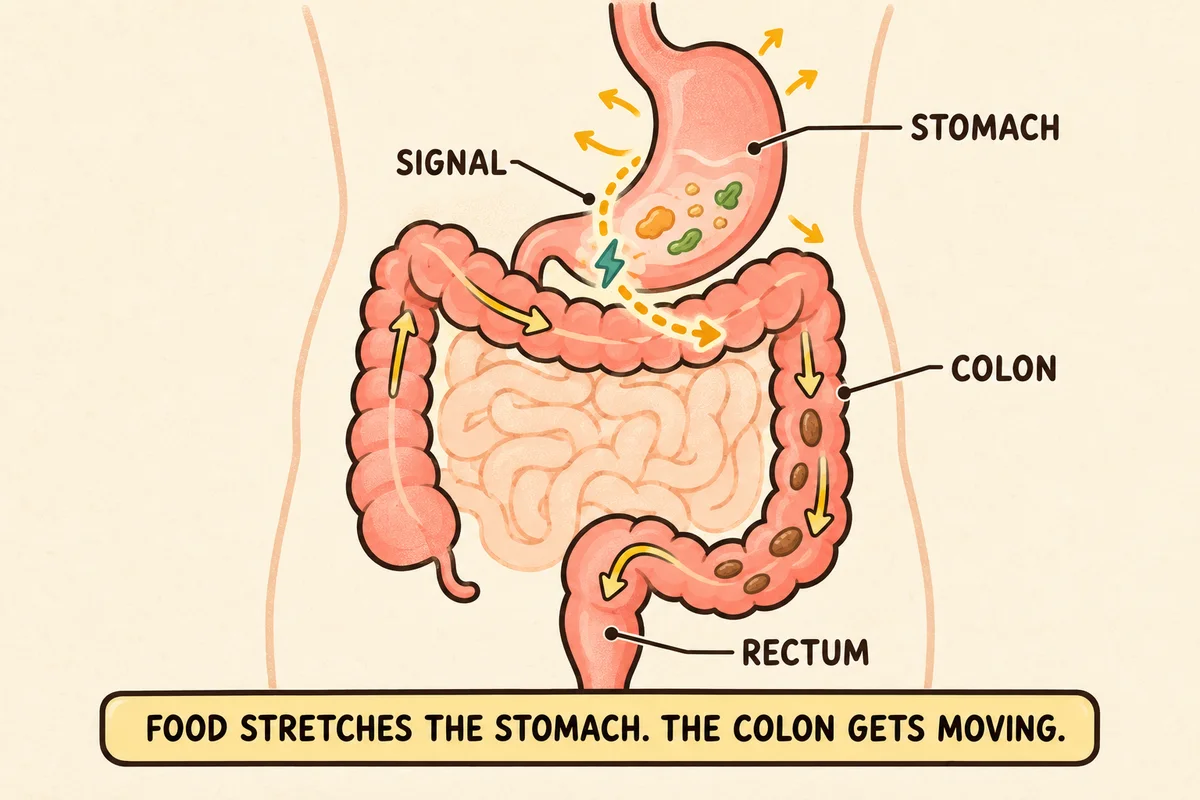
“Gastro” means stomach. “Colic” means colon. Put together, the gastrocolic reflex is your stomach and colon talking to each other [1].
When food lands, your stomach stretches. That stretch sends a signal down to the colon through the vagus nerve (the main nerve line between your brain and your gut) and through gut hormones [2]. The colon answers by squeezing harder, usually within minutes [2]. What it squeezes is stool from earlier meals, nudged toward the exit to make room for what’s coming [1].
It works like a restaurant on a busy night. A big party walks in the front door, and somebody in the back starts clearing tables.
Researchers have tested this pretty directly. In a University of Michigan study, they slipped a small balloon into the stomach of 16 healthy volunteers and filled it with water. More water meant a busier lower colon [3]. No food at all, just stretch. They also dripped different nutrients into the small intestine. Fat revved up the colon. Plain sugar and protein building blocks didn’t [3].
Your colon has a schedule
The colon isn’t equally busy all day. A University of Iowa team recorded colon pressure in 25 healthy adults around the clock while they walked around and ate normal meals [4]. Waking up tripled colon activity. Meals doubled it. The colon’s strongest pressure waves came about 10 times a day, mostly after waking, after meals, or during a bowel movement [4].
So if you wake up, eat breakfast and then need the bathroom, your colon is doing exactly what it’s built to do.
It’s not the food you just ate
This is the part most people get wrong. That chicken sandwich didn’t race through your whole gut in half an hour.
Food takes about 6 hours to get through the stomach and small intestine. Then it spends roughly another 36 to 48 hours in the colon, where water gets pulled out and stool takes shape [5]. Times vary with what and how much you eat [5]. What comes out after breakfast is mostly yesterday’s business, or the day before’s.
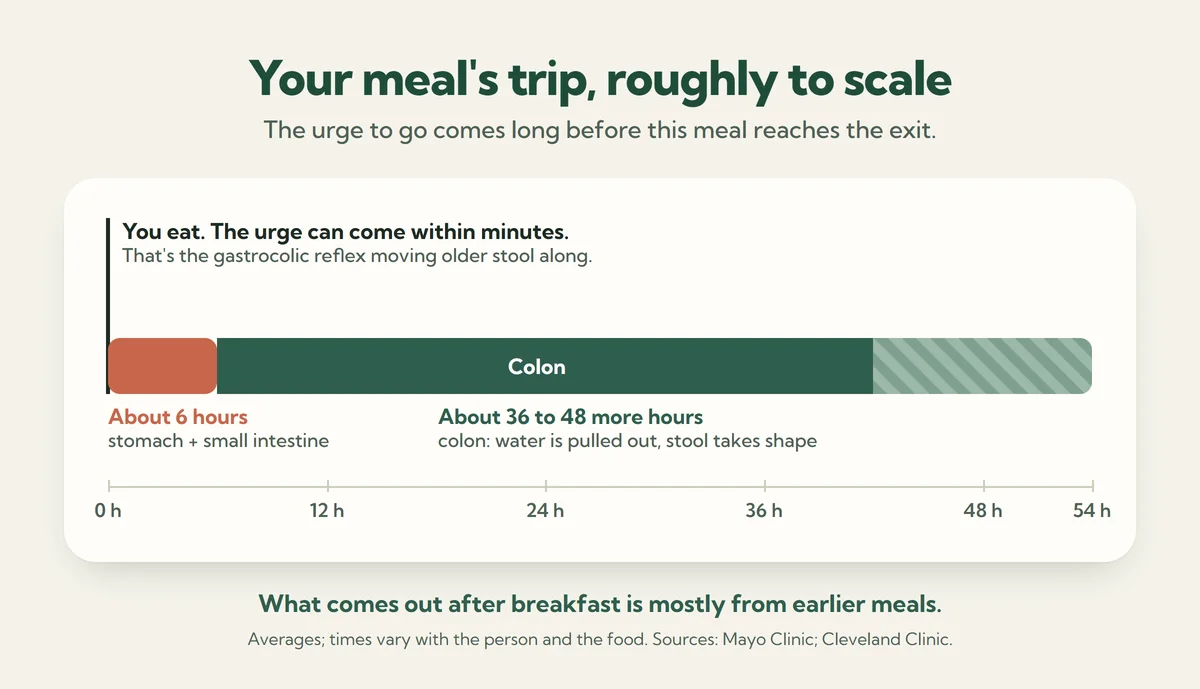
Your lunch is still in the waiting room. It’s the last few meals that are being called up.
How often is normal?
More often than people think. In a large survey of US adults who said their bowel habits were normal, 95.9% went somewhere between 3 times a week and 3 times a day [6]. That’s the “3 and 3” rule doctors use.
So going once after breakfast, or after a couple of meals a day, can sit right in the middle of normal. What matters more is what comes with it. Is the stool formed? Is there pain, urgency you can’t hold, blood, or weight loss? Those questions tell me far more than the count.
Using the reflex on purpose
Here’s where the reflex goes from annoying to useful. A lot of doctors recommend that people train their system to go after a meal, because it’s “one of the most natural ways to go poop.”
If you’re constipated, this is a free tool you already own. The NIDDK, part of the National Institutes of Health, suggests trying 15 to 45 minutes after breakfast, because eating helps your colon move stool [7]. Breakfast gets the edge because you’re stacking two signals: waking up and eating [4]. A few tips that go with it [7]:
- Give it time. Five rushed minutes before you run out the door won’t cut it.
- Feel the urge? Go then, not after one more email.
- A small footstool under your feet can make it easier to relax and push.
Coffee adds to the push. In another University of Iowa study, caffeinated coffee got the colon moving about as much as a 1,000-calorie meal, and about 60% more than plain water [8]. So breakfast and a cup of coffee, then a few unhurried minutes, is a pretty good routine if you already drink coffee.
One honest catch: in some people with slow-transit constipation (stool moving through the colon too slowly), the reflex itself is weaker. One small study of 9 such patients found their colons answered the stomach’s signal more weakly than healthy volunteers’ did [9]. If a routine alone doesn’t do it, that’s not a willpower problem. Our guide to the best diet for constipation covers the food side, our constipation guide covers the rest, and a doctor can check what’s slowing things down.
The patient who skipped breakfast
A woman in her twenties came to see me because, in her words, food went “straight through” her. A few months into a new job with a long drive, she’d quit eating breakfast so she wouldn’t need a bathroom on the road. Mornings? Nothing. Then she’d eat a big takeout lunch at her desk, and half an hour later she was speed-walking to the office bathroom.
When we went through the details, the “straight through” part didn’t hold up. She only went every two or three days, and the first part was hard. No blood, no weight loss, nothing waking her up at night. Her blood count and celiac test came back normal.
She was constipated, and her colon had lost its best chances to go. She was skipping both wake-up calls, the one from getting out of bed and the one from breakfast. Everything piled up until one big meal set it all off at the worst possible time.
So we moved breakfast back home, with her coffee, and gave her 15 unhurried minutes afterward with a step stool under her feet. A few weeks later she was going at home most mornings, and the lunchtime sprints had mostly stopped.
She came in asking me to make eating stop making her poop. I ended up telling her to eat breakfast.
When the reflex is turned up too loud
For some people the reflex isn’t a gentle nudge. It’s a fire alarm. A few things turn up the volume.
Big, rich meals. More food means more stretch, and higher-calorie meals with more fat bring on more of the gut hormones involved [1][3]. Greasy and spicy foods can cause stronger squeezing [1]. If the giant cheeseburger lunch always sends you running, that’s the reflex working overtime, not a mystery.
Coffee and alcohol. Both can get you going [1][8].
IBS. Irritable bowel syndrome, or IBS, is belly pain tied to bowel movements, with diarrhea, constipation or both [12]. Most people with IBS link their symptoms to eating a meal [11]. In one classic study at the University of Pennsylvania, people with IBS had a colon that kept churning longer after a standard meal than it did in people without IBS [10]. It’s the same reflex with the volume knob stuck high. That’s why diarrhea-type IBS so often looks like “every meal sends me to the bathroom.”
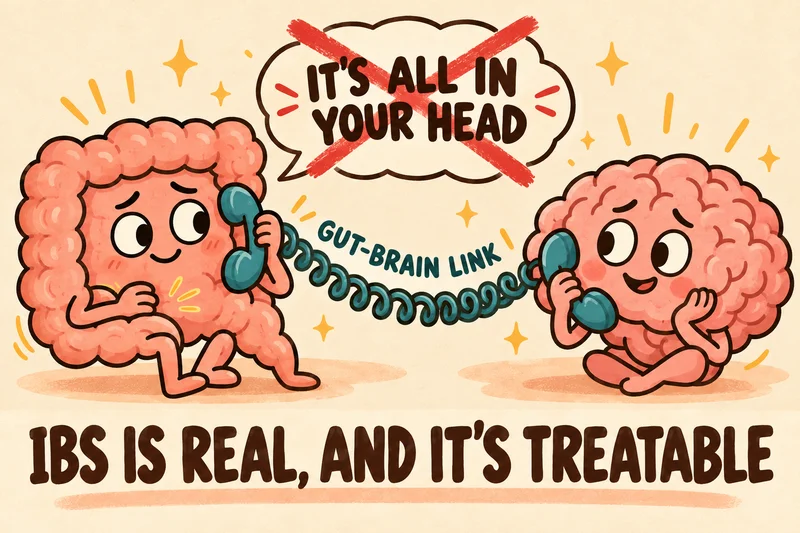
IBS is real, and it’s treatable. America’s GI guideline recommends a short trial of a low FODMAP diet (cutting back, for a limited time, on certain carbs that gut bacteria ferment) and suggests gut-directed psychotherapy [13]. Here’s how gut-directed hypnotherapy for IBS works, and why IBS isn’t all in your head.
Other reasons you might poop after every meal
The reflex is the usual answer, but not the only one. If it’s loose, urgent and new, these are worth knowing about.
- Bile acid diarrhea. Bile acids are made by your liver to help digest fat. When too many reach the colon, they speed it up and pull in water, which brings diarrhea and urgency [14]. Doctors find it in about a third of people with suspected diarrhea-type IBS [14]. It can also follow gallbladder surgery: in a review of 25 studies, about 9% of people developed diarrhea after the operation, and two-thirds of those showed signs of bile acid diarrhea [14]. Medicines that bind bile acids, taken with meals, can help [14].
- Lactose intolerance. Trouble digesting milk sugar. Symptoms, diarrhea included, show up within a few hours of milk or other dairy [15].
- Dumping syndrome. After surgery on the stomach or esophagus, including gastric bypass, food can empty out of the stomach too fast [1][16]. The early kind hits within 30 minutes of a meal, sometimes with diarrhea [16]. About 1 in 10 people who have stomach surgery get it [16].
- An overactive thyroid (hyperthyroidism). Too much thyroid hormone speeds up a lot of what your body does. Frequent bowel movements can come with weight loss despite a bigger appetite and a racing heart. A blood test sorts it out [17].
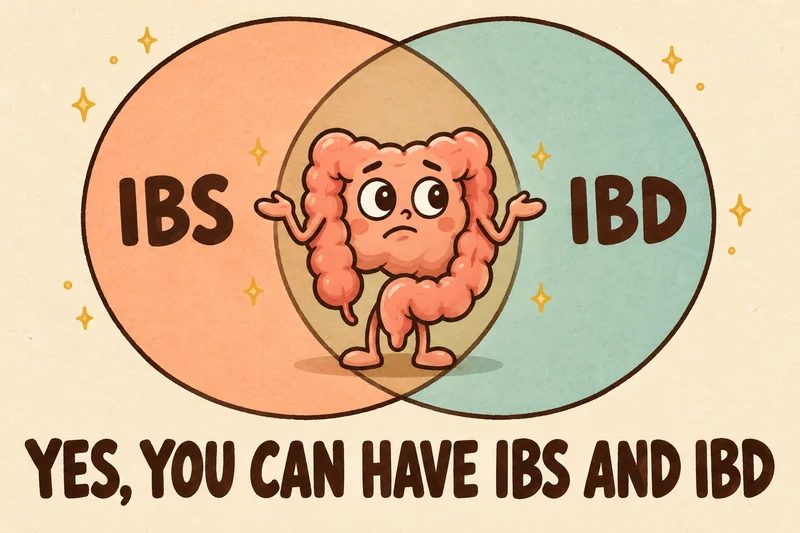
- Celiac disease and inflammatory bowel disease, or IBD (Crohn’s disease and ulcerative colitis). For anyone with IBS-type diarrhea, the guideline suggests a celiac blood test and a stool test called fecal calprotectin, which looks for inflammation in the gut [13]. IBS and IBD can even show up in the same person, and celiac disease has its own rules about eating gluten.
Food triggers are a topic of their own. Our guide on what to eat when you have diarrhea covers that side.
When to see a doctor
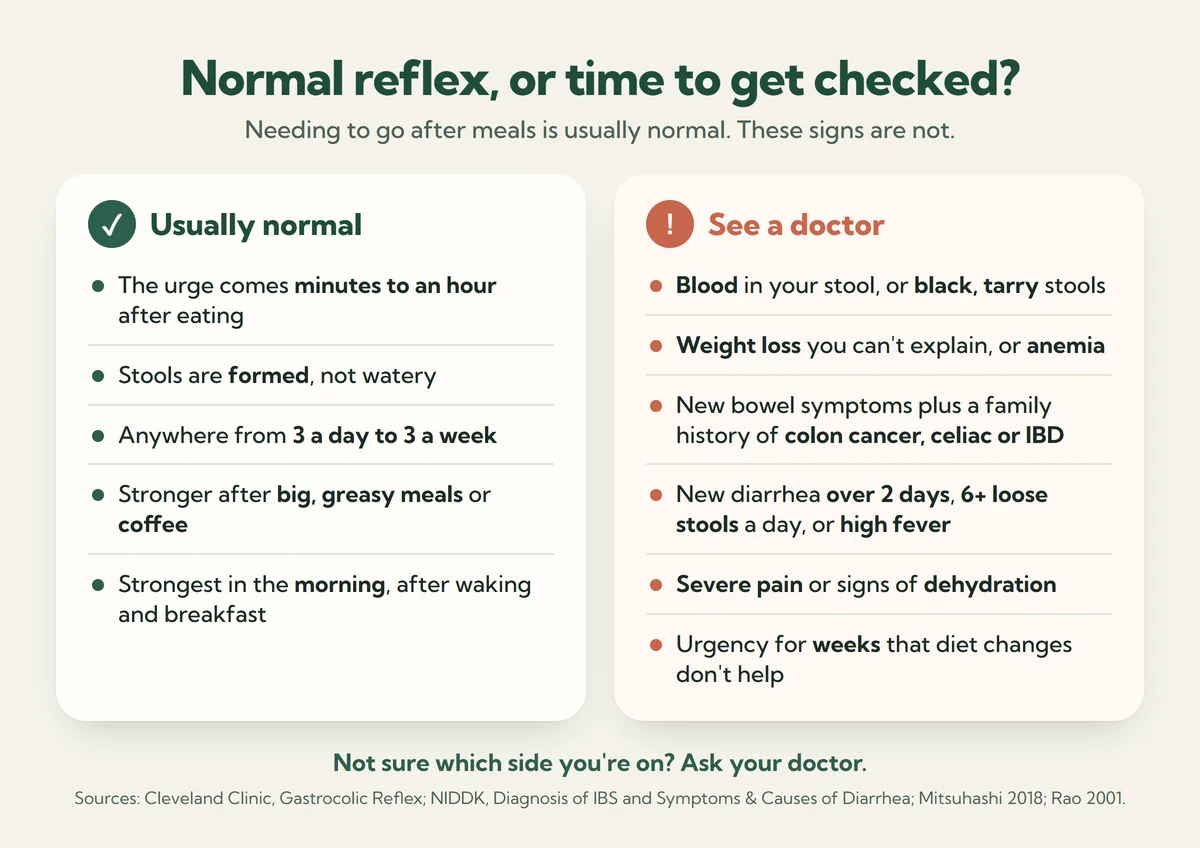
A normal gastrocolic reflex doesn’t make you bleed, and it doesn’t make you lose weight. These need a proper look, sooner rather than later [18][19]:
- Blood in your stool, or black, tarry stools
- Weight loss you can’t explain, or anemia (a low blood count) on a blood test
- A family history of colon cancer, celiac disease or IBD, along with new bowel symptoms
- New diarrhea lasting more than 2 days, six or more loose stools a day, or a high fever
- Severe pain in your belly or rectum, or signs of dehydration (extreme thirst, peeing less than usual, feeling dizzy)
- Post-meal urgency that’s lasted several weeks and doesn’t budge when you change how you eat [1]
On bleeding, I’ll be blunt. Rectal bleeding always deserves at least one proper look. More on that in do I need a colonoscopy for rectal bleeding.
If you’ve got none of those, and you just need the bathroom after meals with otherwise normal stools, I’d be a lot less worried. That’s just your gut doing its job.
Frequently asked questions
Is it normal to poop after every meal?
It can be. Most healthy adults go anywhere from 3 times a week to 3 times a day [6], and the gastrocolic reflex kicks in each time you eat [1]. If your stools are formed and you’ve got no blood, weight loss or pain, pooping after meals usually isn’t a problem. Loose, urgent stools after most meals deserve a doctor’s look [1][13].
Why do I poop immediately after eating?
Does food go straight through you?
Why do I have to poop after drinking coffee?
Can you stop the gastrocolic reflex?
You can’t switch it off, and you wouldn’t want to. You can turn it down. Smaller meals with less grease stretch the stomach less and bring on less of the hormone push [1][3]. If IBS or another condition is behind it, treating that helps, and a doctor can prescribe medicine to calm the bowels when needed [1][13].
So, should you worry?
Pooping right after you eat is usually your gastrocolic reflex doing its job, not food rushing through you. If you’re constipated, put it to work after breakfast. If it’s urgent, loose or comes with warning signs, get it checked, because IBS and the other causes are all treatable.
Smaller, lighter meals are easier on a touchy reflex, and Chef Savi can turn what’s in your pantry into one in seconds. Our diarrhea page has more, and the Gutsavi newsletter brings new articles to your inbox.
Sources
- Cleveland Clinic. “Why do I poop right after I eat?” It’s called the gastrocolic reflex. Updated July 16, 2025. clevelandclinic.org
- Dorfman L, El-Chammas K, Mansi S, Kaul A. Gastrocolonic response. Curr Gastroenterol Rep. 2022;24(11):137-44. doi:10.1007/s11894-022-00849-2
- Wiley J, Tatum D, Keinath R, Chung OY. Participation of gastric mechanoreceptors and intestinal chemoreceptors in the gastrocolonic response. Gastroenterology. 1988;94(5 Pt 1):1144-9. doi:10.1016/0016-5085(88)90005-4
- Rao SS, Sadeghi P, Beaty J, Kavlock R, Ackerson K. Ambulatory 24-h colonic manometry in healthy humans. Am J Physiol Gastrointest Liver Physiol. 2001;280(4):G629-39. doi:10.1152/ajpgi.2001.280.4.G629
- Mayo Clinic. Digestion: how long does it take? mayoclinic.org
- Mitsuhashi S, Ballou S, Jiang ZG, et al. Characterizing normal bowel frequency and consistency in a representative sample of adults in the United States (NHANES). Am J Gastroenterol. 2018;113(1):115-23. doi:10.1038/ajg.2017.213
- National Institute of Diabetes and Digestive and Kidney Diseases (NIDDK). Treatment for constipation. Reviewed May 2018. niddk.nih.gov
- Rao SS, Welcher K, Zimmerman B, Stumbo P. Is coffee a colonic stimulant? Eur J Gastroenterol Hepatol. 1998;10(2):113-8. doi:10.1097/00042737-199802000-00003
- Björnsson ES, Chey WD, Hooper F, et al. Impaired gastrocolonic response and peristaltic reflex in slow-transit constipation: role of 5-HT3 pathways. Am J Physiol Gastrointest Liver Physiol. 2002;283(2):G400-7. doi:10.1152/ajpgi.00082.2001
- Sullivan MA, Cohen S, Snape WJ Jr. Colonic myoelectrical activity in irritable-bowel syndrome: effect of eating and anticholinergics. N Engl J Med. 1978;298(16):878-83. doi:10.1056/NEJM197804202981604
- Chey WD. Food: the main course to wellness and illness in patients with irritable bowel syndrome. Am J Gastroenterol. 2016;111(3):366-71. doi:10.1038/ajg.2016.12
- NIDDK. Symptoms & causes of irritable bowel syndrome. Reviewed November 2017. niddk.nih.gov
- Lacy BE, Pimentel M, Brenner DM, et al. ACG clinical guideline: management of irritable bowel syndrome. Am J Gastroenterol. 2021;116(1):17-44. doi:10.14309/ajg.0000000000001036
- Camilleri M, Nurko S. Bile acid diarrhea in adults and adolescents. Neurogastroenterol Motil. 2022;34(4):e14287. PMC8957499
- NIDDK. Symptoms & causes of lactose intolerance. Reviewed February 2018. niddk.nih.gov
- NIDDK. Definition & facts for dumping syndrome. Reviewed January 2019. niddk.nih.gov
- NIDDK. Hyperthyroidism (overactive thyroid). Reviewed August 2021. niddk.nih.gov
- NIDDK. Diagnosis of irritable bowel syndrome. Reviewed November 2017. niddk.nih.gov
- NIDDK. Symptoms & causes of diarrhea. Reviewed September 2024. niddk.nih.gov
This article is for education only and isn’t medical advice. Talk with your own doctor about your care.
This article is for education only and isn't a substitute for advice from your own doctor. If something feels off, talk to your care team.