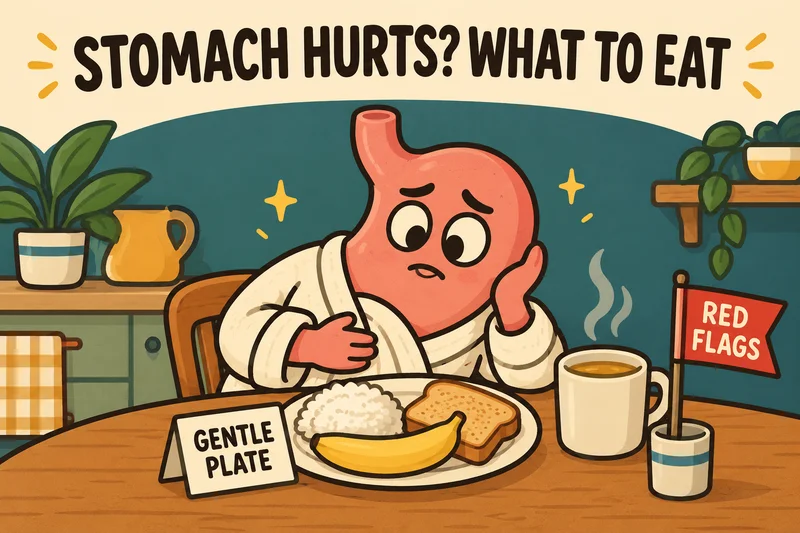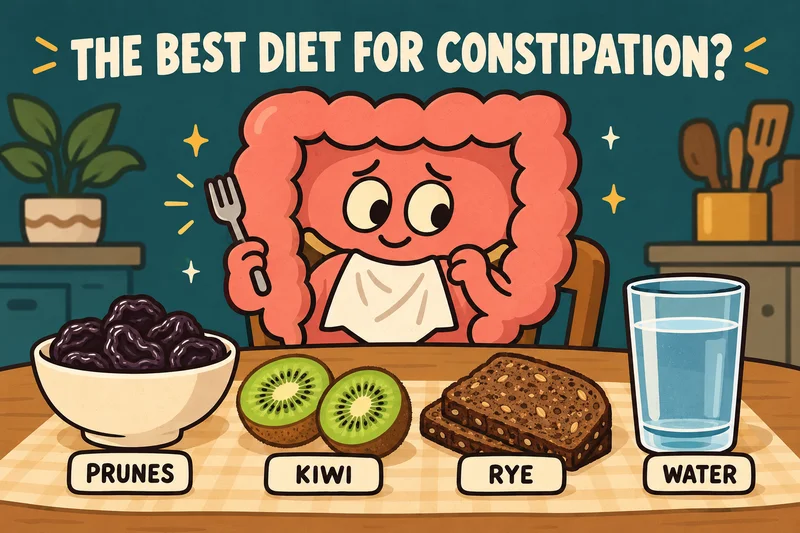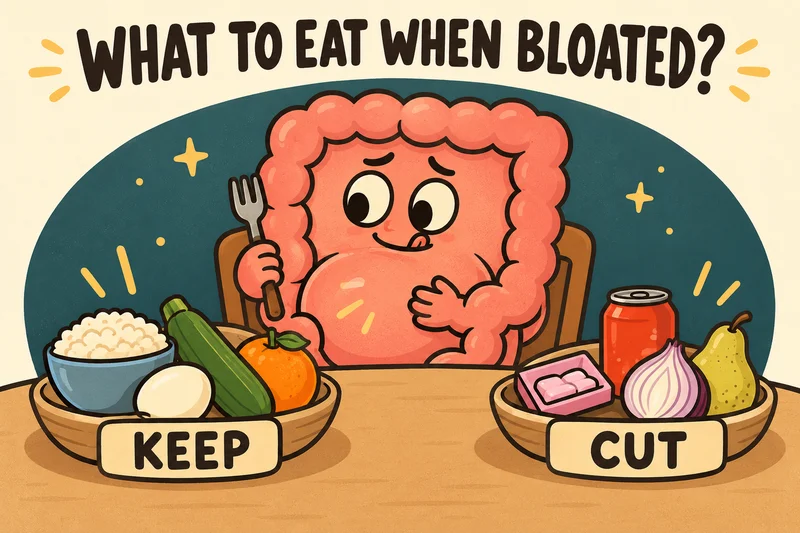

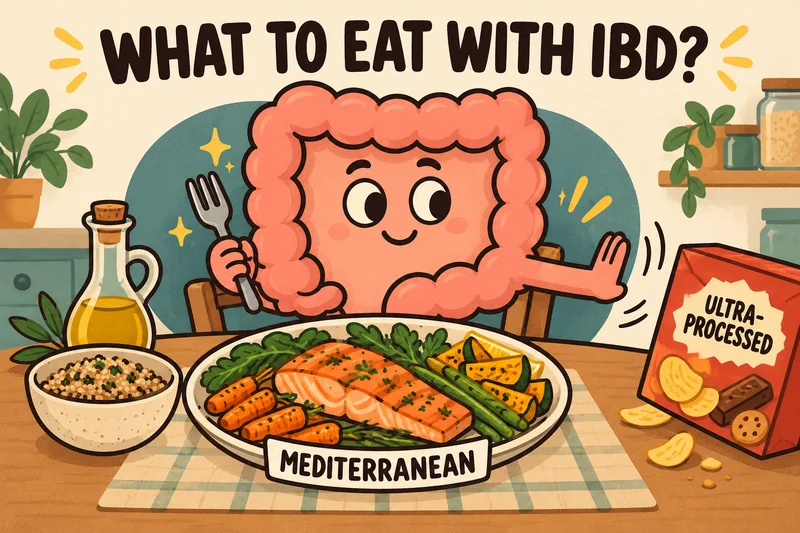
The best IBD diet for most people with Crohn’s disease or ulcerative colitis is a Mediterranean-style one, heavy on fruit, vegetables, olive oil, whole grains and lean protein, and light on ultra-processed food, added sugar and salt [1]. The American Gastroenterological Association backs it for nearly everybody with inflammatory bowel disease (IBD) [1]. Will it stop flares? No diet has been shown to do that reliably in adults, so food rides along with your medicine instead of replacing it [1]. What you adjust is how the food is cooked, and when. Softer stuff in a flare or with a narrowed bowel, a bigger menu once things calm down.
If you only read this part
- Start from a Mediterranean pattern. In a trial of 191 adults with Crohn’s, it did as well as a much stricter diet [2].
- Colitis and Crohn’s differ on a few points, like red and processed meat [1][3].
- In a flare, change how food is cooked and how much you eat at once. Don’t cut whole food groups for good [7].
- A GI dietitian (a dietitian who works with gut diseases) is worth the visit, especially early on [1].
The question I hear most
When we sat down to plan these articles, I put it on the list the way patients ask it: “What’s the best diet for inflammatory bowel disease, Crohn’s, ulcerative colitis?”
I get why. Most people with IBD would rather fix things with food than with another prescription. As I said on another call, “if they can do things all naturally, that’s what they want to do. And so it doesn’t matter what disease it is.”
Then they go online and find fifty diets, each one sworn to by somebody’s cousin. So let’s stick to what’s been tested.
The IBD diet that fits nearly everyone
In 2024, the American Gastroenterological Association (AGA), the big US society of gut doctors, put out expert advice on diet in IBD. Its first point: unless there’s a reason not to, everyone with IBD should be told to eat a Mediterranean diet [1]. That means:
- lots of fresh fruit and vegetables, in variety
- healthy fats like olive oil (the AGA says monounsaturated fats)
- whole grains and other complex carbohydrates
- lean protein, such as fish, chicken, eggs and beans
- not much ultra-processed food, added sugar or salt [1]
It’s a pattern, not a list of forbidden foods. Nobody’s checking your lunchbox. A Mediterranean-style diet with less ultra-processed food has also been linked with a lower risk of getting IBD in the first place [1].
One honest caveat. The AGA’s advice comes from experts reading the research. They didn’t formally grade how strong each piece of evidence is [1]. So no, it isn’t a cure. It’s the best-supported everyday base.
Can diet replace IBD medicine?
No. Here’s the line from the AGA I’d tape to the fridge: “No diet has consistently been found to decrease the rate of flares in adults with IBD” [1].
A big US diet trial in adult Crohn’s shows why. Plenty of people felt better on both diets, but the blood test for inflammation (CRP, C-reactive protein) came back down in only about 1 in 20 of the people who started with a high reading [2]. Feeling better and actually being less inflamed aren’t the same thing. Your medicine handles the inflammation. Food’s job is different: keeping you fed, keeping you strong, and helping you feel human again.
There is one real exception, and it’s in Crohn’s. A formula-only diet called exclusive enteral nutrition (EEN) can bring Crohn’s under control, with stronger evidence in children than in adults [1]. The Crohn’s disease exclusion diet may help mild-to-moderate Crohn’s that’s fairly new [1]. Both are done with your GI team and a dietitian, and I’ve covered them in the Crohn’s disease exclusion diet for adults.
Crohn’s disease diet: what the trials show
Mediterranean vs the specific carbohydrate diet. The specific carbohydrate diet (SCD) has a big following online. It cuts out all grains, milk, and starchy vegetables like potatoes [2]. How does it stack up? A US trial called DINE-CD pitted the two against each other in 191 adults with mild-to-moderate Crohn’s symptoms [2]. Six weeks in, symptoms had settled for 46.5% on SCD and 43.5% on the Mediterranean plan, a gap small enough to be chance [2]. The researchers’ take: since the Mediterranean diet is easier to follow and healthier overall, it may be the better pick for most people with Crohn’s [2].
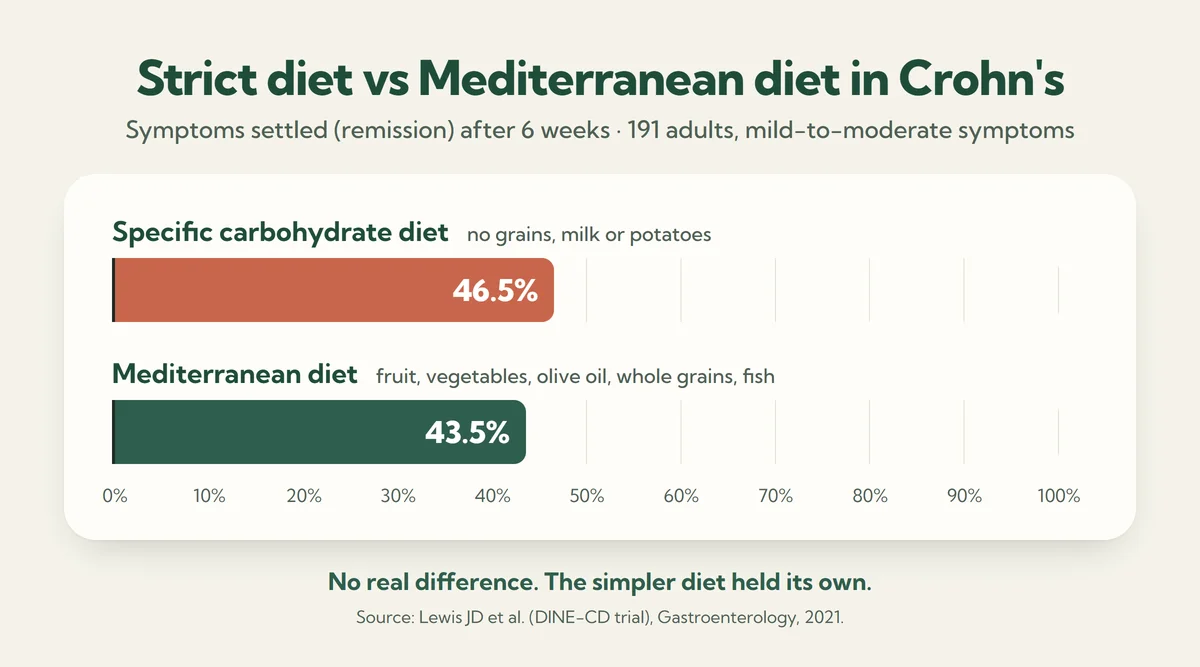
Giving up bread, pasta and potatoes for a three-point difference that may not be real? I’d keep the potatoes.
Red meat. In Crohn’s, the AGA says cutting red and processed meat hasn’t been shown to prevent relapse [1]. A US trial followed 214 adults in remission for 49 weeks: one group ate red or processed meat at least twice a week, while the other kept it to once a month or less. Time to a flare? About the same [3]. A Mediterranean plate is still light on red meat. But if you’re in remission, you don’t have to treat a hamburger like a crime scene.
Ultra-processed food. In a big US study of over 245,000 health workers, people who ate the most ultra-processed food were more likely to develop Crohn’s [4]. That’s about getting the disease, not about flares. And Crohn’s stayed rare in every group, with 369 cases over decades of follow-up [4]. Still, it’s one more nudge toward real food.
A narrowed bowel. Crohn’s can scar and narrow a stretch of bowel. Doctors call it a stricture. Raw, tough plant foods, like raw fruits and vegetables, can be hard to get through that narrow spot [1]. The fix isn’t to give up vegetables. The AGA suggests chewing carefully and cooking or processing fruit and vegetables until soft [1]. Blending works too: blended kale goes down easier than a raw kale salad [7].
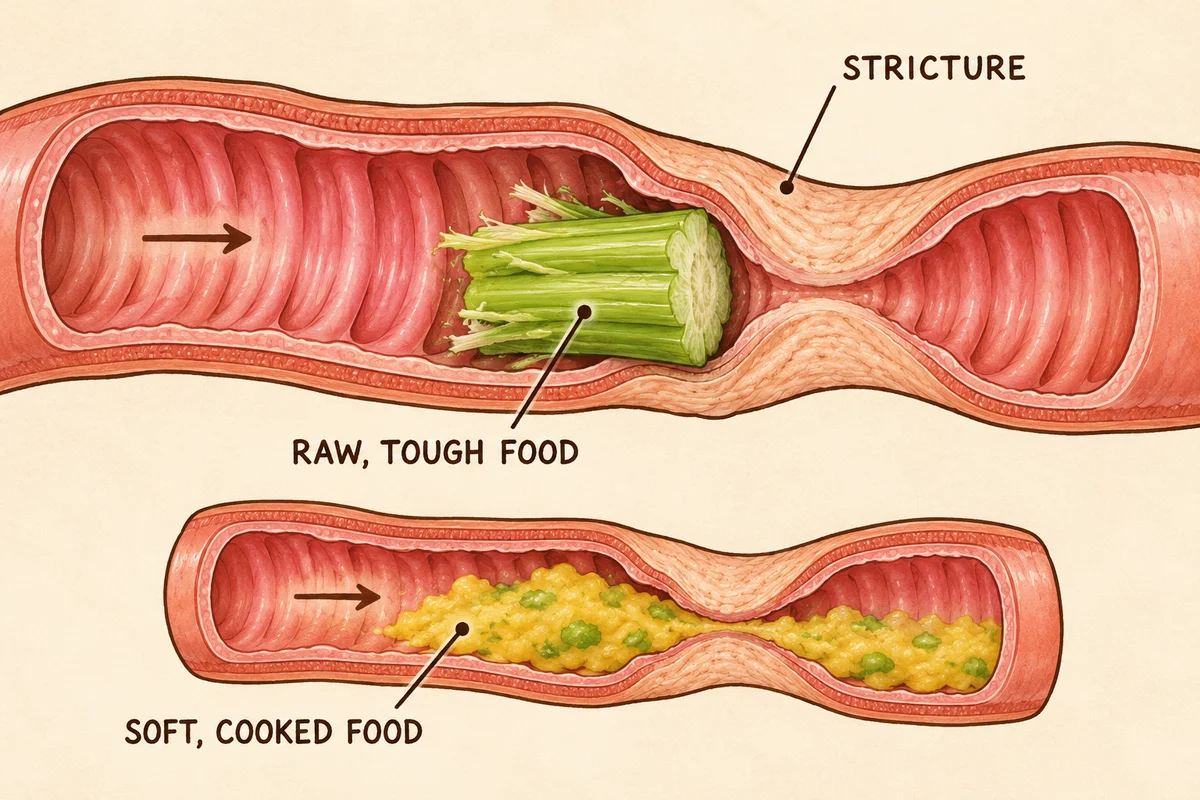
That’s the only group for whom I’d call a lower-fiber, low-residue diet a long-term plan: people with a narrowing. Not everyone with Crohn’s has one, so ask your doctor whether you do.
Ulcerative colitis diet: where it’s different
Ulcerative colitis (UC) sticks to the colon, the large intestine. You start from the same Mediterranean plate, with a couple of twists.
Meat matters more here. Eating less red and processed meat may reduce UC flares, says the AGA, even though it hasn’t helped in Crohn’s [1]. So in colitis, I’d go easy on bacon, hot dogs, sausage and deli meat. Swap in fish, chicken, turkey, eggs and tofu through the week [7].
Fiber is usually fine in remission. Plenty of people with colitis are scared of fiber. In a small US study of 17 people with UC in remission, a low-fat, high-fiber diet was well tolerated, improved quality of life and lowered a blood marker of inflammation [5]. Everyone stayed in remission [5]. It’s a small study, so it doesn’t prove fiber treats colitis. It does show fiber didn’t wreck anybody.
Where an international group goes further. The AGA doesn’t name specific fats or additives. The International Organization for the Study of IBD (IOIBD), an expert group from several countries including the US, does, much of it from weaker evidence [6]. For colitis it suggests:
- cutting back on myristic acid, a saturated fat found in palm oil, coconut oil and dairy fat [6]
- getting omega-3 fats from fish like salmon rather than from supplements [6]
- limiting processed foods with certain additives: carrageenan, carboxymethylcellulose and polysorbate 80 (thickeners and emulsifiers that keep processed food smooth), and maltodextrin and artificial sweeteners [6]
Those names sound like a chemistry final, and you’ll mostly find them in packaged foods. The same additive advice applies in Crohn’s [6], and I wrote more about emulsifiers and Crohn’s.
Eating during a flare vs in remission
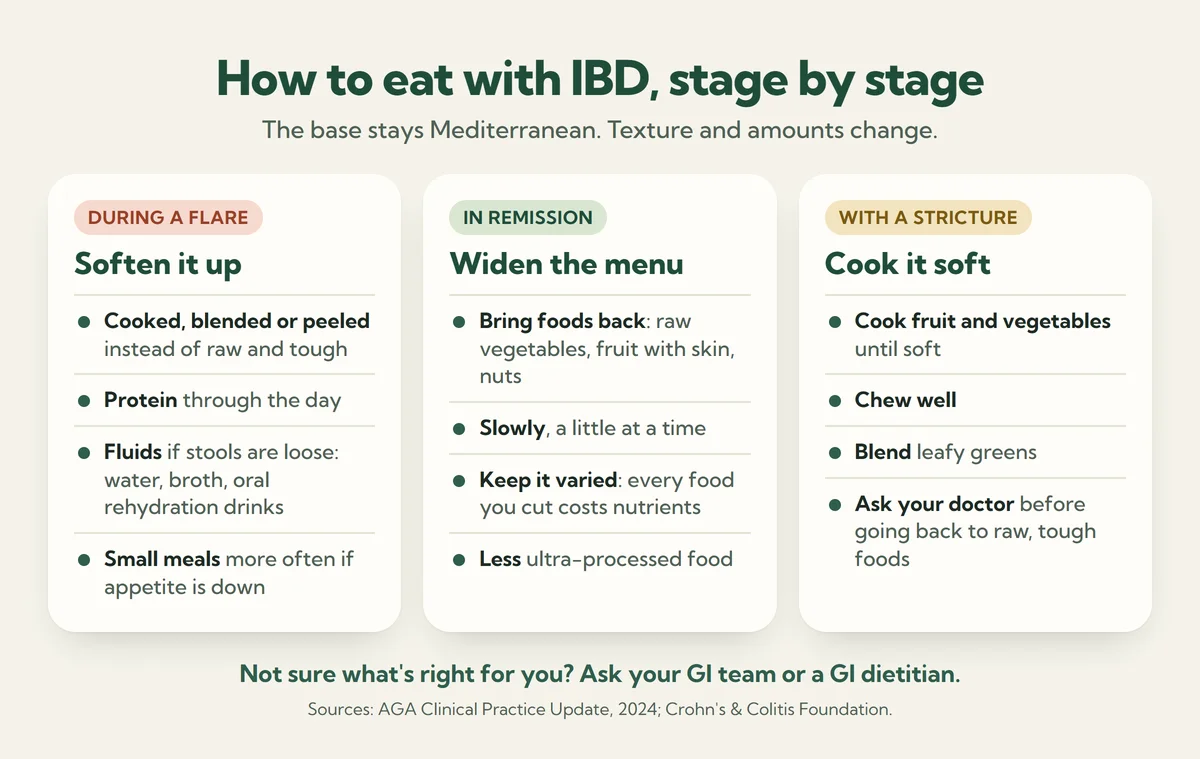
Your diet doesn’t have to be the same all year. The Crohn’s & Colitis Foundation splits it like this [7]:
During a flare
- Keep your usual healthy foods on the menu. Just change how they’re served; cooked, blended or peeled beats raw and tough.
- Get protein in through the day, since active IBD raises how much you need.
- Running to the bathroom a lot? Drink up. Water, broth, smoothies and oral rehydration drinks all count.
- Not hungry, or the scale keeps dropping? Go smaller and more often, like a banana with peanut butter, or yogurt and berries.
- Watch the common trigger foods: fried or very fatty food, lots of lactose (milk sugar), sugar alcohols like sorbitol, sugary drinks and caffeine.
If loose stools are the main problem, my article on what to eat when you have diarrhea has more.
In remission
- Once things settle, bring back the tougher foods you’d parked, like raw vegetables, fruit with the skin on, and nuts.
- Go slow. Your gut would rather meet a few raw carrot sticks than a mixing bowl of kale on day one.
- Every food you cut takes its nutrients with it, so keep the list of foods you eat long [7].
One more thing. A trigger food is something that makes you feel lousy. That doesn’t mean it’s causing inflammation [7]. Coffee might send you running without doing a thing to your colon lining.
The patient who never left her flare diet
A woman in her fifties with ulcerative colitis came in for a routine visit. Her colitis had been quiet for years on her medicine, and her stool test for inflammation was normal. What wasn’t normal was her grocery list.
Years earlier, during a bad flare, someone told her to stay away from fruits and vegetables, and she took it to heart and never stopped. Her meals were white bread, crackers and lunch-meat sandwiches, pretty much every day. She’d cut the broccoli and kept the bologna. If you read the colitis section above, you know that’s backwards.
We brought plants back slowly, cooked soft at first, a little at a time, with a dietitian guiding her. She did fine. The rule had been right for a flare. It just wasn’t meant to last a decade.
Still having symptoms when the IBD is quiet?
Here’s a frustrating one. Your scope looks good, your labs look good, and you’re still cramping, bloated and hunting for bathrooms. A lot of the time that’s IBS (irritable bowel syndrome, an oversensitive gut) riding on top of IBD that’s actually quiet. It feels like inflammatory bowel disease, “but in fact it’s probably just IBS.” That’s how I summed up a long-time Crohn’s patient of mine.
That’s where I usually start with a short low FODMAP trial. FODMAPs are certain carbs (in onions, garlic, beans and wheat, among others) that a touchy gut doesn’t handle well. Cut them for a few weeks, then bring them back one by one and see which ones bite back. An IBD-focused dietitian can tell you whether it fits [7]. The full story is in IBD in remission but still have symptoms and can you have IBS and IBD at the same time.
Cooking low FODMAP is easier with help. Chef Savi, our low FODMAP recipe generator, turns the foods you like into recipes that fit, and our low FODMAP recipes are a good place to start.
Get a GI dietitian, and check your vitamins
The AGA suggests that everyone newly diagnosed with IBD should have access to a registered dietitian [1]. If you have complicated IBD or you’re on a treatment diet like EEN, a dietitian should be part of your team [1].
Why bother? Restrictive diets have side effects, just like medicines do: missing nutrients, weight loss you didn’t want, and an unhealthy relationship with food [7]. Disordered eating is common in people with gut diseases and is tied to worse outcomes [7]. A good dietitian helps you eat more foods, not fewer.
Ask your doctor about these too:
- Vitamin D and iron. The AGA says everyone with IBD should be checked for low levels [1].
- Vitamin B12, if Crohn’s affects a long stretch of your ileum (the last part of the small intestine), or if you’ve had ileum surgery, including a J-pouch (an internal pouch built from the small intestine after the colon is removed) [1].
- Your weight. Losing weight without trying is a sign of malnutrition and should be checked [1].
When to call your doctor
Food can’t fix these. Call your IBD team if you have:
- blood in your stool, or more of it than usual
- Fever? Diarrhea waking you up at night? Call.
- belly pain that’s severe or getting worse, especially with bloating or vomiting if you’ve had a stricture
- weight dropping off without trying
- dizziness or very dark urine, signs you’re getting dehydrated
And talk to your team before you start any strict diet. It’s your body and your call, but we should make it together.
Frequently asked questions
Can diet cure Crohn’s disease or ulcerative colitis?
What is the best diet for Crohn’s disease?
What is the best diet for ulcerative colitis?
The same Mediterranean base [1], with less red and processed meat, which may help prevent UC flares [1]. An international expert group also suggests less palm oil, coconut oil and dairy fat, omega-3 from fish, and fewer processed foods with certain additives. That advice rests on weaker evidence [6].
Is a high-fiber diet good for ulcerative colitis?
Can a bad diet cause Crohn’s disease?
Want help cooking for your gut?
Try Chef Savi for low FODMAP recipes, browse our diarrhea hub for more on loose stools and IBD, and join the Gutsavi newsletter for new articles in your inbox.
Sources
- Hashash JG, Elkins J, Lewis JD, Binion DG. AGA Clinical Practice Update on diet and nutritional therapies in patients with inflammatory bowel disease: expert review. Gastroenterology. 2024;166(3):521-32. doi:10.1053/j.gastro.2023.11.303
- Lewis JD, Sandler RS, Brotherton C, et al; DINE-CD Study Group. A randomized trial comparing the specific carbohydrate diet to a Mediterranean diet in adults with Crohn’s disease. Gastroenterology. 2021;161(3):837-52. doi:10.1053/j.gastro.2021.05.047
- Albenberg L, Brensinger CM, Wu Q, et al. A diet low in red and processed meat does not reduce rate of Crohn’s disease flares. Gastroenterology. 2019;157(1):128-36. doi:10.1053/j.gastro.2019.03.015
- Lo CH, Khandpur N, Rossato SL, et al. Ultra-processed foods and risk of Crohn’s disease and ulcerative colitis: a prospective cohort study. Clin Gastroenterol Hepatol. 2022;20(6):e1323-37. doi:10.1016/j.cgh.2021.08.031
- Fritsch J, Garces L, Quintero MA, et al. Low-fat, high-fiber diet reduces markers of inflammation and dysbiosis and improves quality of life in patients with ulcerative colitis. Clin Gastroenterol Hepatol. 2021;19(6):1189-99. doi:10.1016/j.cgh.2020.05.026
- Levine A, Rhodes JM, Lindsay JO, et al. Dietary guidance from the International Organization for the Study of Inflammatory Bowel Diseases. Clin Gastroenterol Hepatol. 2020;18(6):1381-92. doi:10.1016/j.cgh.2020.01.046
- Crohn’s & Colitis Foundation. What should I eat with Crohn’s or colitis? IBD diet guide. crohnscolitisfoundation.org
This article is for education only and isn’t medical advice. Talk with your own doctor about your care.
This article is for education only and isn't a substitute for advice from your own doctor. If something feels off, talk to your care team.