
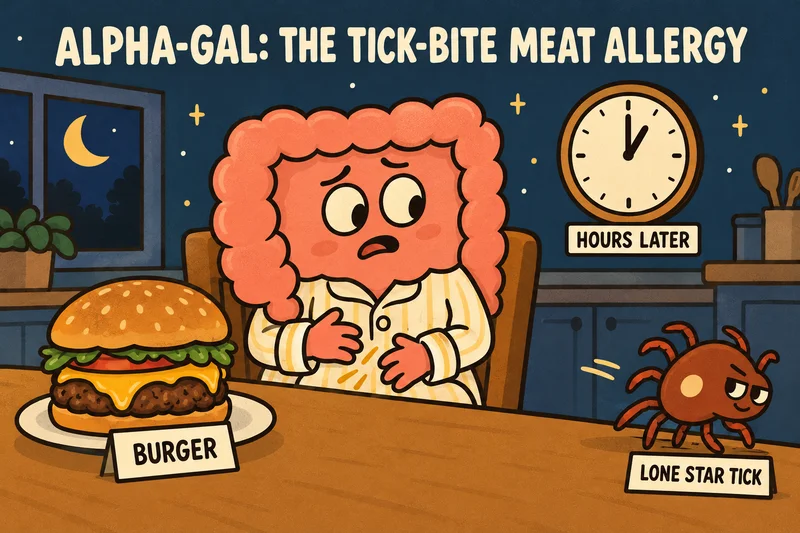
What is alpha-gal syndrome? It’s an allergy to alpha-gal, a sugar in the meat of mammals like cows, pigs and deer, and in the US it usually starts with the bite of a lone star tick [1]. The reaction runs late, typically 2 to 6 hours after the meal [2]. Some people break out in hives or worse. Others only get belly pain, diarrhea and nausea, and end up with an IBS label [7][8].
The short version
- A tick bite can teach your immune system to treat a burger like a threat. Chicken, fish and eggs don’t carry alpha-gal [1][5].
- Waking up at night with cramps after a steak dinner is a classic clue, because the reaction lags hours behind the food [7].
- A blood test (alpha-gal IgE) plus a month off mammal products sorts it out. Levels often drop over time if you dodge new tick bites [7][14].
“Did you know you can have an allergy to meat?”
That was my whole message to the team for this article: “Did you know you can have an allergy to meat?” Allergic to a pork chop? It sounds like a joke.
It isn’t. Labs in the US flagged more than 110,000 suspected cases between 2010 and 2022, and the CDC thinks as many as 450,000 Americans may be affected [1][11]. Plenty of doctors are still catching up. When the CDC surveyed 1,500 US health care providers in 2022, 42% had never heard of it [12].
How a tick bite makes you allergic to meat
Cows, pigs, deer and most other mammals carry alpha-gal on their cells. People don’t [1]. Some ticks carry it in their spit, too. When one of them bites, it can put alpha-gal into your blood, and your immune system may decide it’s an enemy [1]. After that, the next steak can set off an allergic reaction [1].
In the US, the main suspect is the lone star tick [1]. The adult female is easy to pick out of a lineup: reddish-brown, with one white dot on her back [6]. She’s also pushy. The CDC calls this species “a very aggressive tick that bites humans” [6].
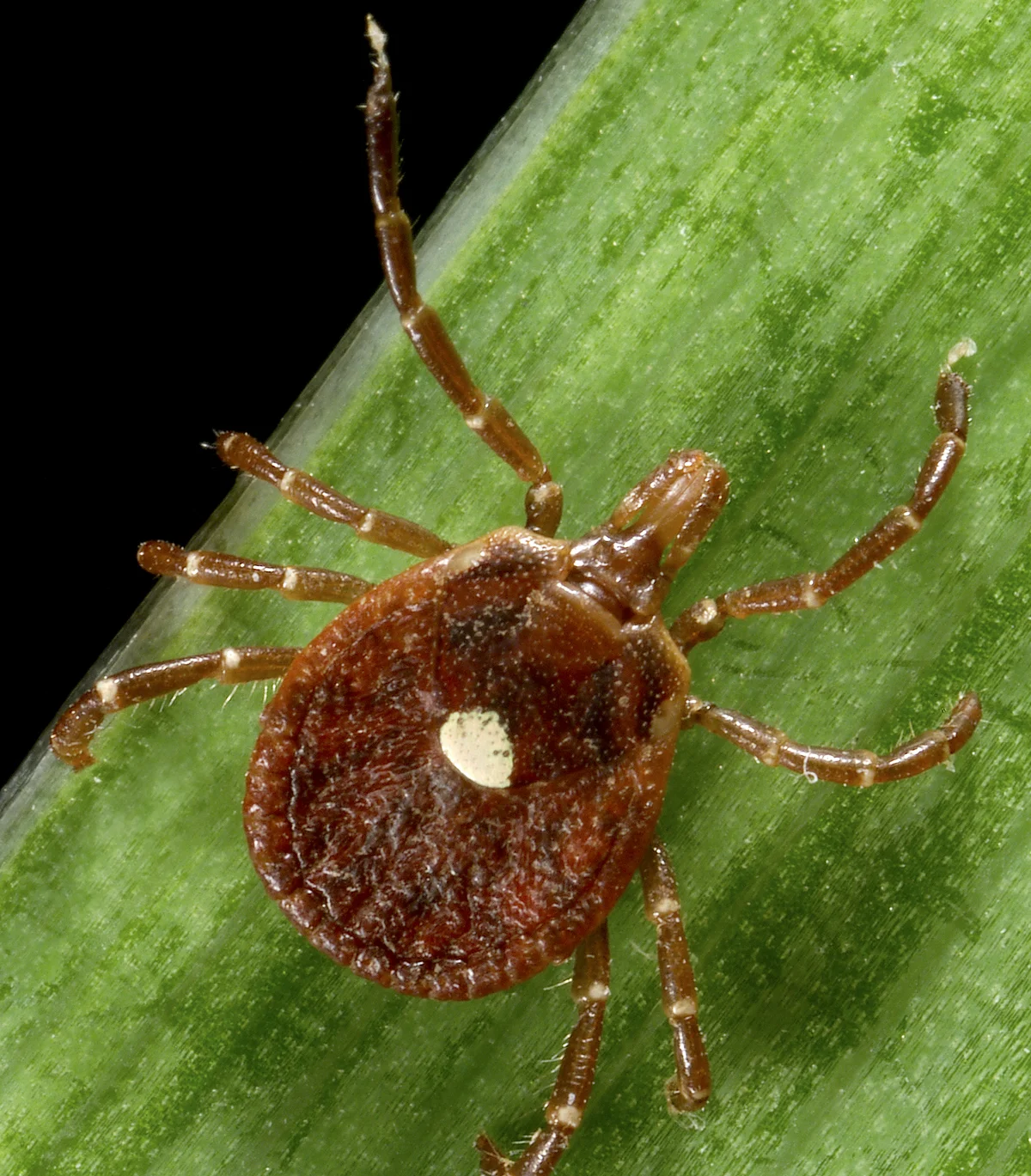
Most US cases come from the South, East and Central states, where most lone star ticks live [1]. The AGA (American Gastroenterological Association) puts the range at roughly New York and Iowa down to Texas and Florida [7]. Deer are this tick’s main host, and hunters are at higher risk [1][7].
A bite doesn’t doom you. Most people who get bitten never develop it, and nobody knows yet why some do [1]. Symptoms can also take weeks to months to show up after the bite [2]. So who’d ever connect a tick in June with a rough night in October?
Why the reaction comes hours later
This is the strange part, and it’s why the allergy hides so well. In 2009, a University of Virginia team described 24 patients who reacted 3 to 6 hours after eating beef, pork or lamb [13]. The researchers called it “a departure from the conventional food allergy paradigm” [13].
Here’s the plumbing. Alpha-gal rides in on the fat from the meat. Your gut packs that fat into tiny carriers that reach your bloodstream in roughly 2 hours [7]. Then it meets the immune cells packed into your gut lining, and they dump histamine [7]. That brings on the pain, the cramping and the mucus [7].
So by the time it hits, dinner is long over. You’re asleep. Then you’re very much awake.
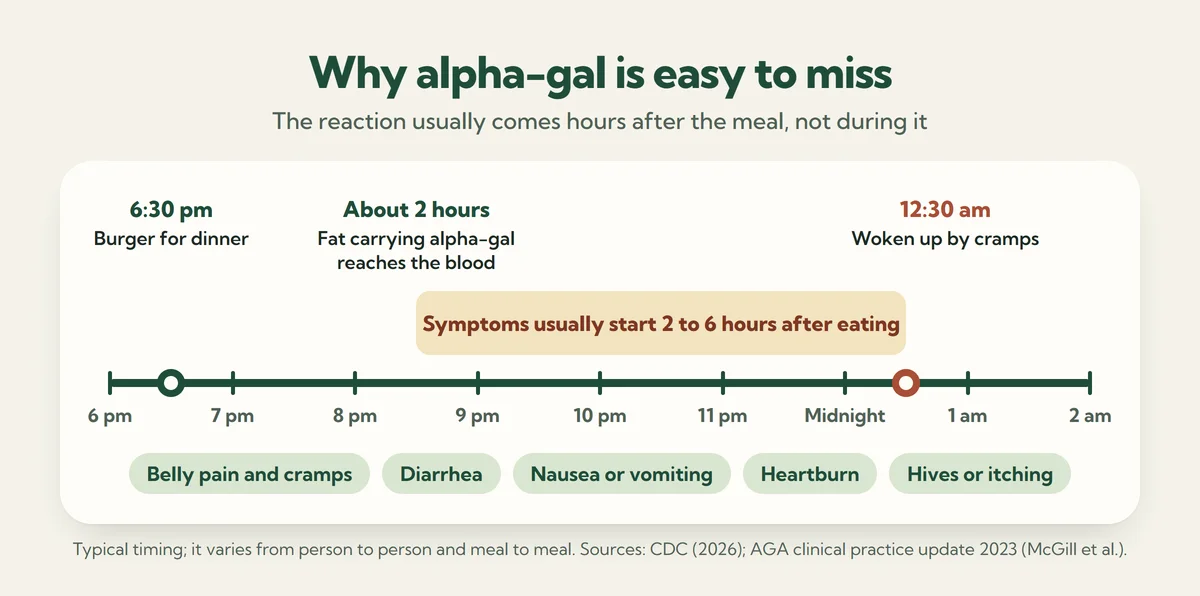
It isn’t consistent, either. You can eat a burger on Tuesday and feel fine, then have a miserable night after the same burger on Saturday [1][7]. Fattier cuts, alcohol, exercise and anti-inflammatory pain pills like ibuprofen can make a reaction more likely or worse [7].
Alpha-gal symptoms: when it’s only your gut
The CDC’s list of alpha-gal symptoms [2]:
- hives or an itchy rash
- nausea, vomiting, or severe stomach pain
- heartburn or indigestion, and diarrhea
- coughing, shortness of breath or trouble breathing
- swelling of the lips, throat, tongue or eyelids
- a drop in blood pressure, dizziness or feeling faint
The worst version is anaphylaxis, a whole-body reaction that can be life-threatening [2].
Now the part every GI patient should hear. Some people get the belly symptoms and nothing else. No hives, no swelling. Just pain, diarrhea, nausea or vomiting, hours after a meal [7]. The AGA’s 2023 update for GI doctors warns that these patients “may otherwise be diagnosed with irritable bowel syndrome” [7]. Here’s what the research found:
- Two Southern GI clinics, 16 patients with gut-only alpha-gal. Most had belly pain (87.5%), nausea (75%) and diarrhea (69%). More than half met the criteria for diarrhea-type IBS [8].
- None of them had linked their symptoms to meat. Three in four remembered a tick bite. The diagnosis took a median of 21 months [8].
- A GI practice in central Virginia tested 1,112 adults, and about 1 in 3 came back positive. Of the 122 positives they could follow, 82% got better off mammal products. Only about 4% had hives [9].
- When allergists fed meat to patients under watch, about 4 in 10 who reacted had gut symptoms only [10]. Most of those patients were children in South Africa, so hold that number loosely.
IBS is real, and it’s treatable. I’ve written about why IBS isn’t all in your head. But when the bad nights line up with what you ate hours earlier, an IBS label shouldn’t end the search. And if your trouble is more of a mad dash right after you eat, that’s a different story: why you poop right after eating.
Two of my patients with alpha-gal
When I was in Texas, I had a patient who loved ribeye steaks. One day his referral came across my desk. He’d already been through an extensive workup for severe belly pain, cramping, nausea, vomiting and diarrhea, roughly two to six hours after eating that favorite steak.
After talking to him, it turned out his symptoms changed from meal to meal. Some nights they were so mild he’d just brush them off. Other times they were so bad he ended up in the ER. That’s part of what makes it so hard to pin down. It also happened with other foods made from pork and beef, but never with chicken or fish. That was alpha-gal.
Another patient of mine was a trail runner. Long weekend runs through brushy trails, and a few ticks he’d flicked off without a second thought. Then came the “mystery” nights. A normal dinner, then around 1 or 2 a.m., hives, belly pain and nausea. Once his blood pressure dropped and he ended up at urgent care.
He’d already cut gluten and tried lactose-free milk. No change. So I had him write down what he ate and when the symptoms started. Burgers, bacon, ice cream, a bowl of beef chili. Always hours later. Bacon is pork and ice cream is milk, and both come from mammals [5][7]. His alpha-gal IgE came back positive. Chicken, fish and plant proteins, a hard look at hidden mammal ingredients, and serious tick prevention settled him down.
The alpha-gal test
The main test is a blood test for alpha-gal IgE, the allergy antibody your body makes against alpha-gal [3]. The big commercial labs run it [3]. An allergist may add skin tests with pork or beef [3].
A positive result isn’t a diagnosis on its own [3][7]. Lots of people carry the antibody and eat steak without a problem. In a North Carolina study of 403 people getting screening colonoscopies, 31% had it, and they had no more belly pain or diarrhea than anybody else [7]. Among blood donors tested in 2024-2025, about 31% in Arkansas and 26% in Missouri were positive [15].
A small number on the report can still count, though. In the gut-only clinic patients, the median level was 0.61, against 51.3 in an earlier group with hives, swelling or anaphylaxis [8].
So the AGA’s diagnosis takes three things [7]:
- Symptoms that fit.
- A positive alpha-gal IgE.
- Symptoms that improve on an alpha-gal-free diet. The AGA suggests at least a month off mammal meat and products like lard, dairy and ice cream, then a recheck [7].
During that month, skip restaurants and processed foods where you can. Cross-contamination is easy there [7]. Why not just do a meat challenge in the office, the usual gold standard for food allergies? Reactions show up hours late and not every time, which makes it impractical [7].
What to cut if you have alpha-gal
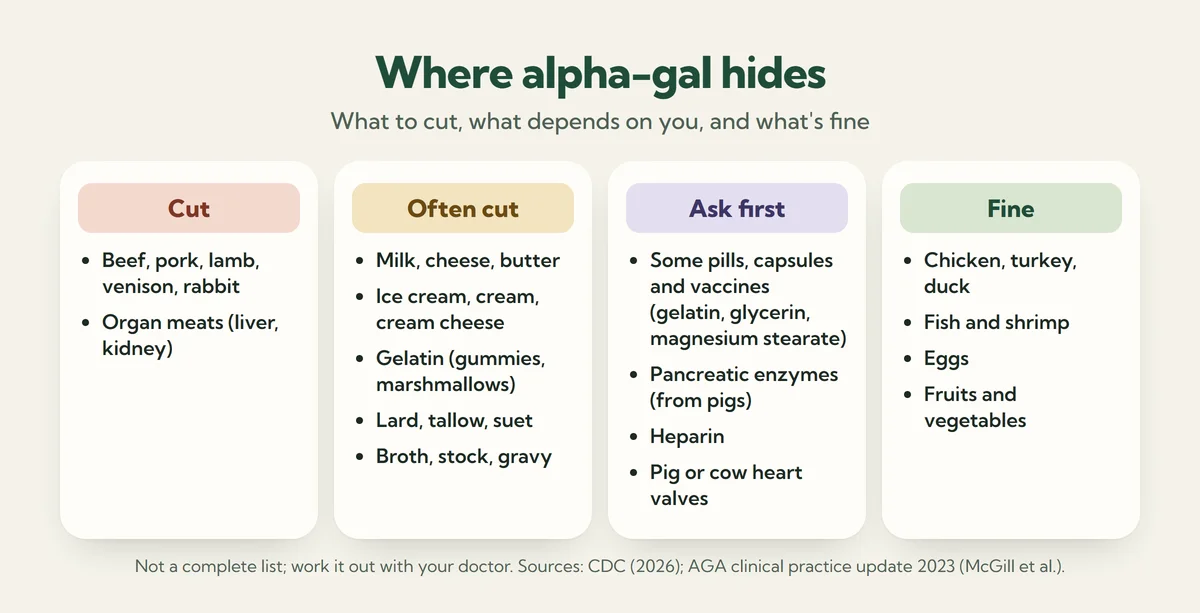
The AGA’s rule of thumb is to skip “any animal with hair” [7]. That’s beef, pork, lamb, venison, rabbit and organ meats [5]. Chicken, turkey, duck, fish, shrimp, eggs, fruits and vegetables are all fine [5].
Then there’s the gray zone:
- Dairy. Milk has smaller amounts. High-fat dairy like ice cream, cream and cream cheese carries more [7]. Many people with alpha-gal handle milk products fine [5].
- Gummy bears and marshmallows? Usually made with gelatin, which comes from pig or cow bones [7].
- Anything cooked in lard, tallow or suet, plus broth, stock and gravy made from meat [5].
- Believe it or not, some people react to the fumes from frying bacon or beef [7].
Medicines can carry it too. Some pills, capsules and vaccines use gelatin, glycerin or magnesium stearate, though not everyone reacts [5]. Heparin (a blood thinner), pig or cow heart valves and pancreatic enzymes made from pigs are on the list as well [5][7]. Check with your doctor before any new medicine or vaccine [4].
That’s actually how the whole story cracked open. Around 2007, a colon cancer drug called cetuximab caused severe infusion reactions in 1 in 5 patients in North Carolina and Tennessee [7]. The culprit turned out to be IgE against the alpha-gal on the drug itself [7].
A dietitian helps here, and the AGA wants GI doctors to bring one in [7]. For dinner ideas built on chicken, fish and beans, Chef Savi can turn what’s in your pantry into a recipe in seconds. Grilling the chicken? Here’s what to know about charred meat. And if you don’t have alpha-gal and just wonder how much red meat is too much, that’s its own question: is red meat bad for you?
Is alpha-gal syndrome permanent?
Not always. The AGA calls it “a dynamic condition” [7]. In a University of Virginia study, alpha-gal IgE dropped in 89% of the stretches when patients avoided new tick bites, by a median of about 27% a year [14]. After new bites, it more often went up [14]. That study measured antibodies, not whether people could eat meat again [14].
If you’ve avoided bites, the AGA suggests rechecking the level 6 to 12 months after diagnosis [7]. As it falls or turns negative, some people can try dairy first, then small portions of meat [7]. Small means about a quarter of a serving, with an antihistamine and epinephrine (the emergency allergy medicine) on hand and someone else around [7]. Had hives, swelling or trouble breathing? Then do this only with your allergist [7]. The CDC calls it an individual decision [4].
There’s no cure yet, and no desensitization program [7][11]. Some clinics advertise acupuncture as a cure, but no controlled studies back it up [7]. If anybody sells you an alpha-gal cure, ask to see the study.
Keep the ticks off
New bites can make it worse or bring it back [4][7]. The CDC and the AGA suggest [4][7]:
- Repellent: an EPA-registered one, with DEET, picaridin or another listed ingredient.
- Treat your outdoor clothes and boots with permethrin.
- On hikes, pull tight socks up over your pant cuffs. It looks dorky, but it helps.
- Back inside? Shower and do a full-body tick check.
When to see your doctor
Call 911 or get to the ER for trouble breathing, swelling of your lips, tongue or throat, or feeling faint after eating [2]. If you’ve been prescribed epinephrine, use it and still go [2].
Book a visit if:
- Cramps, diarrhea or vomiting keep waking you up hours after meals, especially if you live in or came from lone star tick country [7].
- You’ve got an IBS label, and your bad nights seem to follow certain meals [7][8].
- You get hives or swelling hours after eating. Ask about an allergist [7].
- You see blood, have anemia, or are losing weight without trying. Alpha-gal doesn’t cause these, so they need their own workup [7].
If you’re diagnosed, ask for a plan for accidental exposures. The AGA’s version: tell someone you trust, take an antihistamine, and keep epinephrine within reach [7]. More on eating through a bad bout is in what to eat when you have diarrhea.
Frequently asked questions
Can you be allergic to meat?
What are alpha-gal stomach symptoms?
Is alpha-gal syndrome permanent?
Is alpha-gal contagious?
Burger night shouldn’t end at 1 a.m.
If your gut keeps waking you up hours after a cookout and you spend time where lone star ticks live, ask your doctor about an alpha-gal test. It’s one blood draw. Our Food intolerances hub and Diarrhea hub have more, and the Gutsavi newsletter brings new articles to your inbox.
Sources
- Centers for Disease Control and Prevention (CDC). About alpha-gal syndrome. January 5, 2026. cdc.gov
- CDC. Symptoms of alpha-gal syndrome. January 5, 2026. cdc.gov
- CDC. Clinical diagnosis and testing (alpha-gal syndrome, for health care providers). January 5, 2026. cdc.gov
- CDC. Managing alpha-gal syndrome. January 5, 2026. cdc.gov
- CDC. Fast facts: products that may contain alpha-gal. January 5, 2026. cdc.gov
- CDC. Where ticks live. cdc.gov
- McGill SK, Hashash JG, Platts-Mills TA. AGA clinical practice update on alpha-gal syndrome for the GI clinician: commentary. Clin Gastroenterol Hepatol. 2023;21(4):891-6. doi:10.1016/j.cgh.2022.12.035
- Croglio MP, Commins SP, McGill SK. Isolated gastrointestinal alpha-gal meat allergy is a cause for gastrointestinal distress without anaphylaxis. Gastroenterology. 2021;160(6):2178-80.e1. PMC9706491
- Richards NE, Richards RD Jr. Alpha-gal allergy as a cause of intestinal symptoms in a gastroenterology community practice. South Med J. 2021;114(3):169-73. doi:10.14423/SMJ.0000000000001223
- McGill SK, Levin ME, Shaheen NJ, et al. Gastrointestinal-isolated distress is common in alpha-gal allergic patients on mammalian meat challenge. J Clin Gastroenterol. 2024;58(1):80-4. PMC10314969
- Thompson JM, Carpenter A, Kersh GJ, et al. Geographic distribution of suspected alpha-gal syndrome cases: United States, January 2017-December 2022. MMWR Morb Mortal Wkly Rep. 2023;72(30):815-20. PMC10390090
- Carpenter A, Drexler NA, McCormick DW, et al. Health care provider knowledge regarding alpha-gal syndrome: United States, March-May 2022. MMWR Morb Mortal Wkly Rep. 2023;72(30):809-14. PMC10390085
- Commins SP, Satinover SM, Hosen J, et al. Delayed anaphylaxis, angioedema, or urticaria after consumption of red meat in patients with IgE antibodies specific for galactose-alpha-1,3-galactose. J Allergy Clin Immunol. 2009;123(2):426-33. PMC3324851
- Kim MS, Straesser MD, Keshavarz B, et al. IgE to galactose-α-1,3-galactose wanes over time in patients who avoid tick bites. J Allergy Clin Immunol Pract. 2020;8(1):364-7.e2. PMC6980488
- Saunders EF, Taylor ML, Jones ES, et al. Alpha-gal immunoglobulin E seroprevalence among blood donors: 10 states, 2024-2025. MMWR Morb Mortal Wkly Rep. 2026;75(25):315-21. doi:10.15585/mmwr.mm7525a1
This article is for education only and isn’t medical advice. Talk with your own doctor about your care.
This article is for education only and isn't a substitute for advice from your own doctor. If something feels off, talk to your care team.